When to See Bears in Juneau: A Month-by-Month Guide to Pack Creek & Waterfall Creek (2026)
Understanding the real rhythms of brown bears in the Tongass National Forest.
Written by Wild Coast Excursions’ Alaskan Bear Viewing Guides
Juneau’s bear viewing season isn’t one single “best” window—it’s a cycle driven by sedges, mating behavior, spawning salmon, weather, tides, and changing energy needs. Whether your trip takes you to Pack Creek on Admiralty Island, or Waterfall Creek on Chichagof Island, knowing the bears’ seasonal shifts helps set realistic expectations and explains why our guides choose specific locations on specific dates.
Below is the real seasonal timeline, based on field experience—not generic Alaska-wide assumptions or automated content. This is what actually happens in the Tongass each year.
May to June 20: Spring Sedge Season, Mating Behavior, and Beach Foraging
Late spring is one of the most beautiful brown bear viewing periods in Coastal Alaska. Spring sedge growth transforms Pack Creek’s estuary into a rich, high-protein feeding area that pulls bears into the open daily. Because Pack Creek has been protected from hunting for decades, bears use these meadows and tidal flats naturally and consistently—something you won’t find elsewhere in Southeast Alaska and the Tongass.
Courtship and mating behavior occur in open habitat during this window, offering opportunities to witness posturing, sparring, interactions between boars and sows, and bears establishing dominance. Coastal foraging is equally active as bears dig for clams and mussels, graze shoreline plants, and move predictably along the intertidal zone. With lush spring coats, new landscapes, and long daylight, this is one of the most rewarding periods of the year.

Photo by Wild Coast Excursions Guide Nathan Kelley
Seasonal Highlights
- High-protein sedge grazing throughout the estuary
- Visible courtship and mating behavior
- Regular beach foraging on clams, mussels, and intertidal plants
- Multiple bears visible throughout the day due to abundant early-season foods
- Excellent lighting and photography conditions
- In the Tongass, spring and early summer viewing is best at Pack Creek on Admiralty Island.
Late June to Mid-July: The Mid-Summer Lull
This period is widely misunderstood online, yet very important for trip planning. As sedges mature and mating winds down, brown bears disperse into the forest and higher elevations to take advantage of a wider range of foods—new green growth, root masses, and emerging berries. Their movements become less tied to the estuary and more spread across the landscape.
Sightings along the coast continue during this time, but they are more variable. Bears may pass through the flats unpredictably or remain inland for long stretches. This is the window in which choosing the correct site for the date is essential, since different locations experience different levels of mid-summer bear presence. When guests are flexible with the timing of their trip, and if bear viewing is a priority, we recommend coming before or after this window.
Seasonal Highlights
- Bears dispersing into forested and upland feeding areas
- Foraging shifts toward greens, berries, and roots
- Less predictable shoreline and estuary visibility
- Continued, but less reliable, bear presence
- Site selection and timing become especially important for consistent viewing
Mid-July Through August: Peak Salmon Season
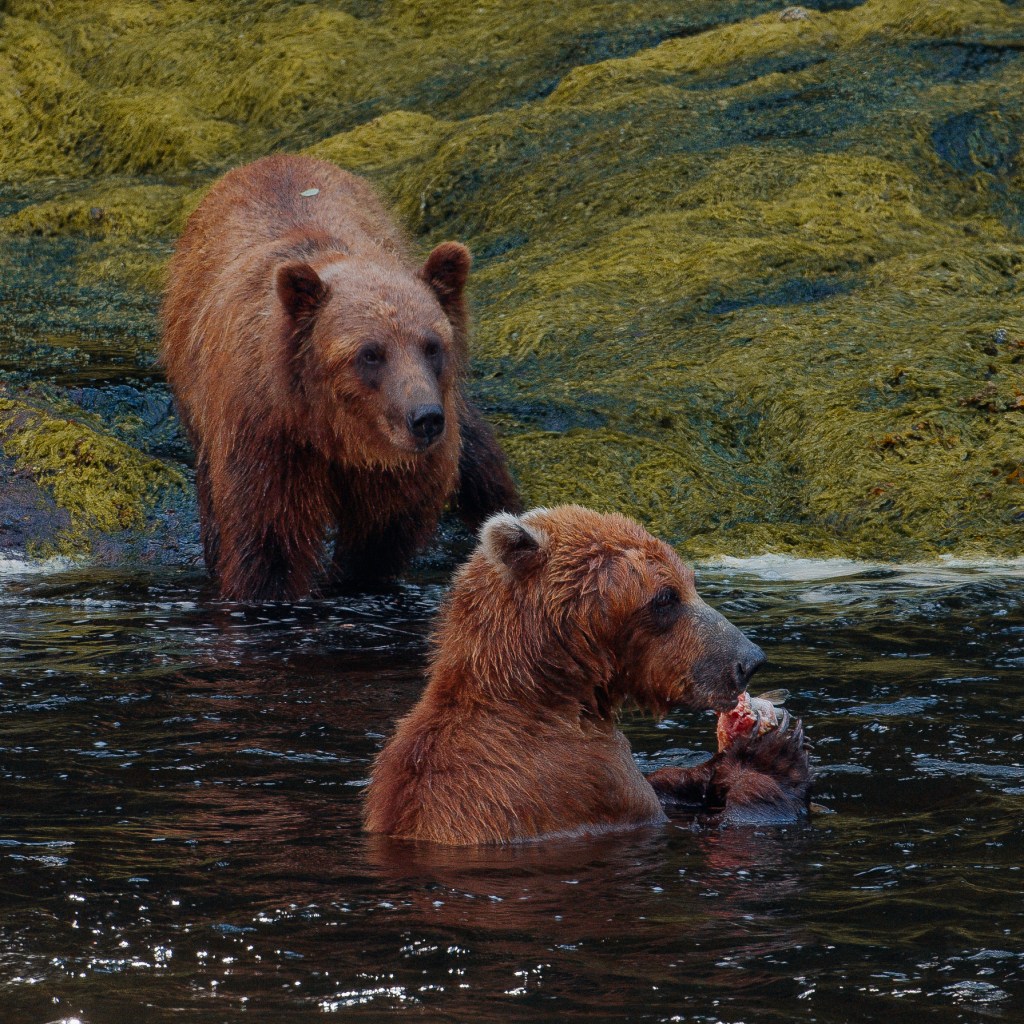
By mid- to late July, salmon are returning to creeks throughout Admiralty and Chichagof Islands, and this seasonal shift triggers the most dramatic increase in bear activity of the year. Bears return from inland areas and concentrate around creeks, estuaries, and falls where fishing opportunities are highest.
This period—late July through all of August—is the most consistently active window across the region. Multiple brown bears may be visible at once. Interactions around fishing access, competition, and social hierarchy are common. Both Pack Creek and Waterfall Creek offer outstanding wilderness bear viewing during this season. For many guests, this is the classic “Alaska bear viewing” experience.
Seasonal Highlights
- Consistent daily activity centered around salmon and tides
- Bears fishing, competing, and moving between creek and estuary
- Multiple bears in view simultaneously during strong runs
- High-density and/or close-range fishing behavior ideal for photography
- Reliable patterns at both Pack Creek and Waterfall Creek
Early to Mid-September: Late Runs, Scavenging, and Hyperphagia
September varies depending on salmon timing and weather but often peak salmon season continues well into the month. If salmon runs continue strongly, bears remain active at creeks, especially younger bears and sows with cubs. If runs taper, bears shift to scavenging—feeding on carcasses and late-season “zombie fish” that still provide critical calories. As bears experience hyperphagia and prepare for hibernation, movements become purposeful and focused on maximizing fat reserves.
Photography remains excellent in September due to softer light, fall colors emerging in the understory, and reduced glare on the water. Activity can be slightly more concentrated and intense as bears take advantage of the last available salmon. The rapid onset of harsh fall weather in Southeast Alaska means it’s a good idea to be flexible and have a few days available to complete fly-in and boat-in wilderness trips.

Photo by Wild Coast Excursions Guide Nathan Kelley
Seasonal Highlights
- Active fishing during late salmon runs
- Scavenging on carcasses when runs decline
- Concentrated feeding ahead of winter denning
- Excellent photography in softer fall light
- Fewer visitors to viewing areas
- Activity varies based on run timing and annual conditions
Why Pack Creek and Waterfall Creek Peak at Different Times
Although both locations lie within the same broader ecosystem, their seasonal strengths differ due to habitat structure, creek dynamics, salmon biomass, land and hunting management, and historic bear use patterns.
Pack Creek (Admiralty Island)
- Best early-season habitat (late May–mid-June)
- Reliable sedge, mating, and shoreline activity
- Strong salmon fishing from mid July through September
- Protected habitat supporting generational bear familiarity and habituation to people
Waterfall Creek (Chichagof Island)
- Premier salmon viewing from late July through mid September
- High-density salmon biomass
- Wide-open creek viewing for photography
- Consistently strong late-summer bear presence
Neither location is universally “better.” They simply shine at different times of year, as well as during different tides and weather—which is exactly why we do not ask guests to choose.
Trust Us to Choose the Best Location for Your Date
Brown bears move based on tides, weather patterns, salmon timing, sedge availability, social hierarchies, and daily needs. Because these variables shift throughout the season, we never ask guests to choose between Pack Creek and Waterfall Creek.
Instead, we evaluate:
- Your date
- Tide cycle
- Recent bear activity
- Salmon run progression
- Weather patterns
- Permit availability
- Habitat conditions that week
Then we assign the location offering the strongest wildlife experience on that specific day.
This approach delivers the most reliable and natural bear viewing possible.
FAQ: Juneau Bear Viewing Seasons
When is the best time to see bears in Juneau?
It depends on what you hope to see.
- Spring sedge and mating: late May–mid-June
- Peak salmon behavior: mid-July–August
- Late-season feeding and scavenging: early–mid September
Does bear activity happen daily?
Yes, but habitat use changes by season. Early summer favors green estuaries and tide flats; mid-summer favors higher-elevation foods; late-summer salmon runs bring bears back to creeks.
Is July a good month for bear viewing?
Yes. Early July is part of the mid-summer lull, but mid- to late July marks the return of salmon and a steep increase in activity.
Should I choose Pack Creek or Waterfall Creek?
You shouldn’t need to choose. Wildlife conditions determine the best site for your date, and we assign trips accordingly.
Which month has the most consistent activity?
Late July through early September is the most reliably active period across the region.
Book Your Bear Viewing Trip
Choosing the right location—Pack Creek or Waterfall Creek—depends on wildlife behavior, salmon timing, and conditions on the day of your visit. We monitor these patterns throughout the season and match each trip to the best bear viewing available.
Ready to plan your visit?
Explore our bear viewing trips and reserve your date below.