Pack Creek Permit Guide (Complete 2026 Overview)
Key Facts
- Pack Creek Permit Required: April 1 – September 30
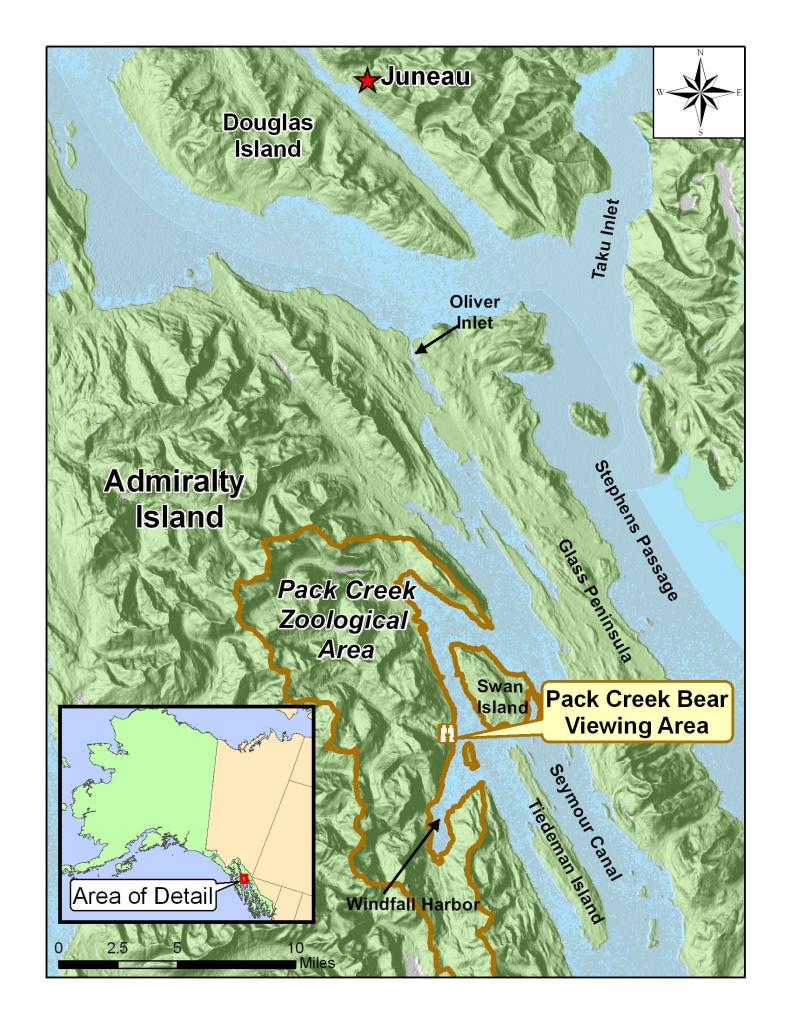
- Where: Pack Creek Bear Viewing Area, Admiralty Island (Kootznoowoo Wilderness)
- Daily Limit: 24 visitors per day (public + commercial, averaged weekly)
- Public Permit Release: February 1 annually on Recreation.gov
- Cost: $60 per person + $6 reservation fee
- Visiting Hours: 9 a.m. – 9 p.m.
- Ranger Staffing: Consistently June 1 – September 10
- Independent Travel: Allowed with a valid public permit
- Transportation: Not included for independent visitors. Guided trips typically include in-town transportation.
- Commercial Guiding: Limited to USFS-permitted operators.
1. Overview
Pack Creek is one of the most regulated and biologically significant bear-viewing sites in Alaska. Located on Admiralty Island in the Kootznoowoo Wilderness, it is jointly managed by the U.S. Forest Service and Alaska Department of Fish & Game. Because of its ecological sensitivity, Pack Creek is limited to 24 total visitors per day, and nearly all access depends on securing the correct permit.
This guide explains how the permit system works, when permits are released, what they cost, and how to plan a legal visit to Pack Creek.
2. What a Pack Creek Permit Allows
A Pack Creek day-use permit authorizes one full day of access during the permitted season.
A valid permit gives visitors access to:
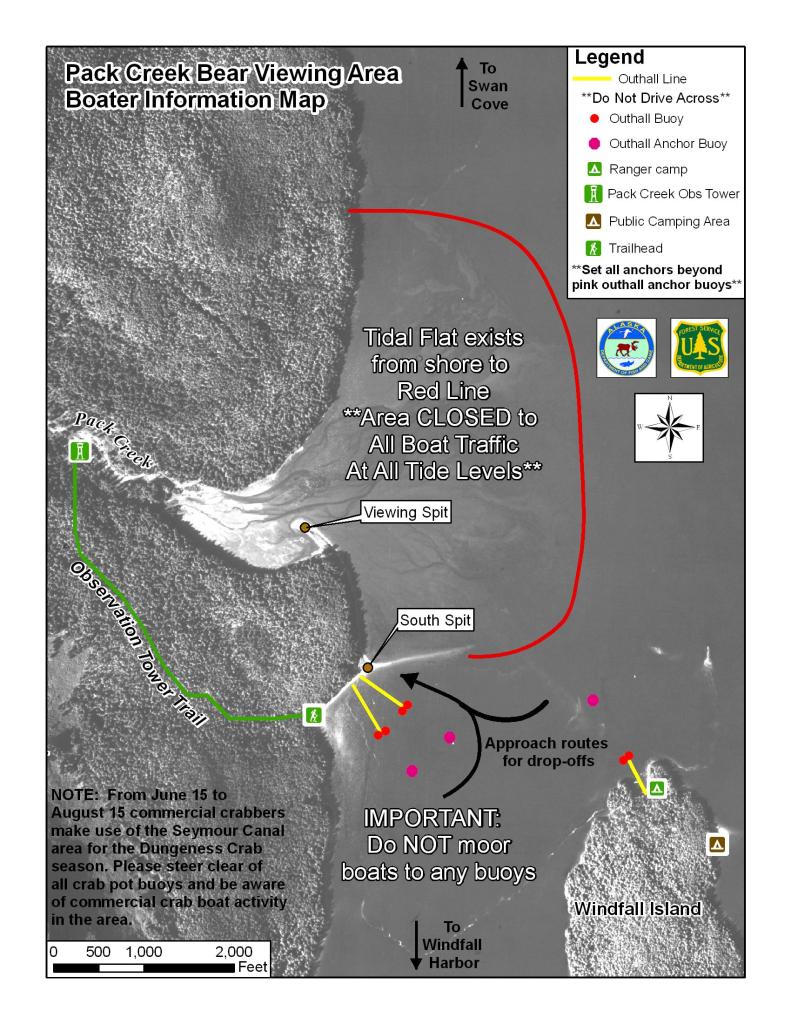
- The day-use beach (South Spit)
- The Viewing Spit (primary estuary viewing area)
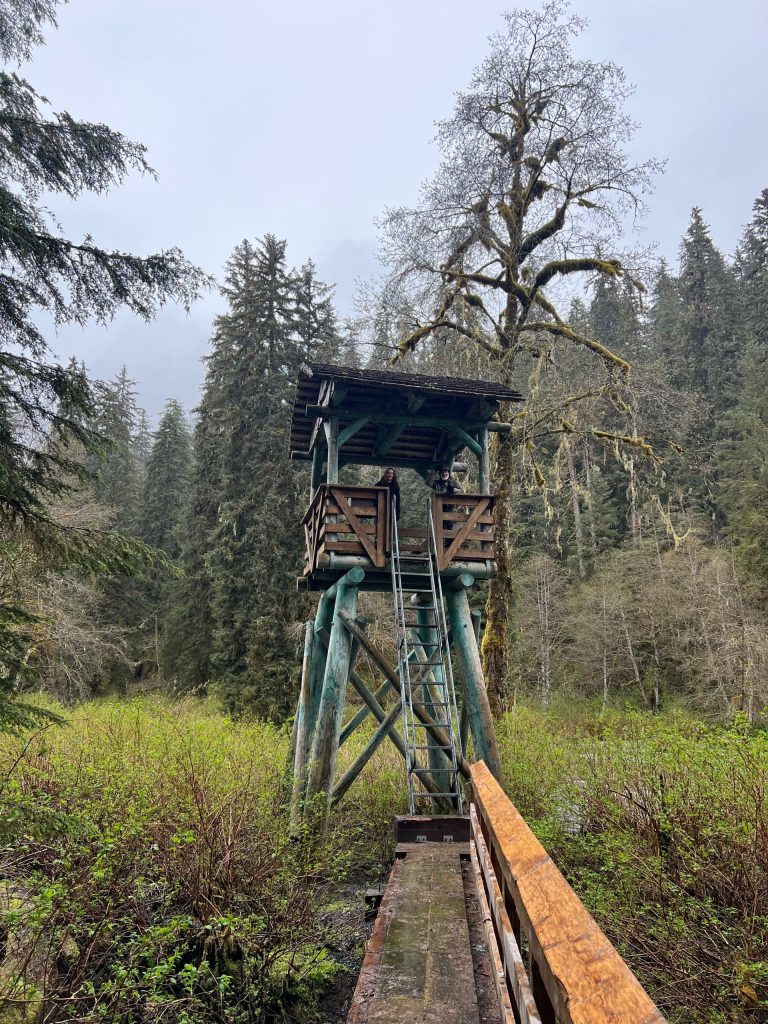
- The Observation Tower (≈1 mile inland, forested viewing platform)
Permits allow visitation from 9:00 a.m. to 9:00 p.m. on the specific date listed.
Transport is not included. Most travelers arrive via 25-30 minute floatplane flights from Juneau.
3. Daily Quota
The Pack Creek Bear Viewing Area is capped at 24 visitors per day during the April–September permit season.
These 24 are divided into:
- Public permits (booked directly by independent visitors on Recreation.gov)
- Commercial permits (held by authorized operators)
The split of commercial and public permits is divided in half on a weekly basis, so availability varies by date. High-demand dates typically sell out.
4. When Permits Are Released
All public permits for the upcoming season are released on:
February 1 via Recreation.gov.
This includes every date from April 1 to September 30.
Early planning is strongly recommended for:
- Peak Alaska visitor season (July and August)
- Shoulder-season dates with strong bear activity (May–June 20, Aug 26–mid-Sept)
- Multi-day travelers arriving by boat
5. Permit Fees, Refunds & Changes
Permit Fee: $60 per person
Reservation Fee: $6 per transaction (non-refundable)
Refund rules:
- Refunds of public permits are given if canceled 8+ days before your visit
- No refunds inside 7 days
- No changes once the permit is printed
- Changes allowed if made more than 7 days before the visit
6. Why Many Visitors Choose to Go With a Guide
Guided Pack Creek trips are popular for both first-time and returning visitors because professional guides simplify logistics, help minimize impacts on wildlife, and enhance the overall experience. While independent travel is allowed with a public permit, more than half of Pack Creek visitors choose to go with a permitted guide for the reasons below:
Resource Protection
Pack Creek lies within the Kootznoowoo Wilderness, one of the highest-density brown bear habitats on Earth. Permitted guides are trained in site rules, minimum-impact travel, Leave No Trace principles, and protocols designed to protect bears and the surrounding ecosystem.
Safety & Wildlife Awareness
Coastal brown bears behave predictably with visitors who behave in a consistent way. However, they can be sensitive to noise, spacing, and movement. Guides help visitors maintain appropriate behavior and positioning so bears can move freely through natural travel corridors.
Logistics & Site Flow
A guided day removes the complexity of:
- floatplane scheduling
- tide timing during arrival/departure
- rotating between the South Spit, Viewing Spit and Tower
- understanding site expectations and daily bear patterns
This allows visitors to focus on the wildlife and landscape rather than the technical details of the day.
Experience & Interpretation
Guides often contribute biological context, identification, behavior interpretation, and natural history information that enriches the experience—particularly valuable for photographers and families.
Equipment & Transportation
Guided Pack Creek trips also simplify two of the most challenging parts of visiting a remote site in Southeast Alaska: transportation and specialized gear.
Transportation:
Floatplane operators do not provide transportation from cruise docks, hotels, or vacation rentals in Juneau. On busy cruise days, arranging independent transport to and from the seaplane base can be difficult or impossible. Guided trips typically include round-trip in-town transportation, which removes this variable.
Equipment:
Pack Creek is a true wilderness site with no shelter, boardwalks, or infrastructure. Visitors often need gear that is cumbersome to travel with, including:
- knee-high rubber boots or waders
- waterproof outerwear
- binoculars and a spotting scope with a tripod
- dry bags
- lunch packed and stored according to Pack Creek food rules
Guided trips normally provide all required gear and food, making preparation significantly easier for travelers arriving by air, cruise ship, or without their own equipment.
Cost Efficiency for Small Groups
For groups of two or three, joining a guided Pack Creek trip is often more practical than chartering a private floatplane. Guided trips typically sell seats individually rather than requiring travelers to hire an entire aircraft, making this a cost-efficient option for small parties and includes the added services of a professional guide.
7. Commercial Guiding Requirements
6. Commercial Guiding Requirements
Commercial guiding at Pack Creek is limited to a small number of operators who hold a valid U.S. Forest Service Special Use Permit for the Pack Creek Bear Viewing Area.
These permits are issued to ensure guides operate in a way that protects:
- the Pack Creek bear population,
- the surrounding Kootznoowoo Wilderness, and
- the site’s long-standing wildlife viewing traditions.
Permitted operators must meet USFS standards for:
- resource protection,
- minimum-impact practices,
- Leave No Trace principles, and
- compliance with all Pack Creek site rules.
Because the number of authorized guiding companies is intentionally small, visitors booking a guided trip can expect that their operator is properly permitted and working in coordination with on-site rangers.
Independent visitors may still enter Pack Creek using public permits within the 24-person daily limit.
8. Ranger Staffing & Orientation
June 1–September 10 is the most consistent period for ranger staffing. Early May visitation has grown as Pack Creek’s spring season becomes better known, but ranger presence during this period depends on annual staffing and budget and is not guaranteed.
During staffed periods:
- All visitors must attend a mandatory orientation upon arrival
- Rangers may regulate group distribution between the Viewing Spit and Tower
- Food handling rules are strictly enforced
Outside these dates, Pack Creek may be unstaffed, but permits are still required.
Official information is available from the U.S. Forest Service on this Pack Creek Wildlife Viewing Site page
9. How to Obtain a Permit
- Go to Recreation.gov
- Search for Pack Creek Bear Viewing Area
- Select your date and group size
- Complete payment
- Print your permit prior to travel
If your preferred date is unavailable:
- Check adjacent dates
- Consider shoulder-season viewing windows
- Check for commercial availability through an authorized Pack Creek operator
10. Logistics That Affect Your Permit
Floatplane Timing
- Most visitors spend 3–5 hours on site
- Flights are approximately 25-30 minutes each way
- Weather may delay flights (including your pick up); Pack Creek access is tide-influenced
- Local operators such as Ward Air have extensive experience flying into Pack Creek.
“Occasionally, flights to and from Pack Creek are cancelled due to high winds and poor visibility. Have a contingency plan and be prepared by bringing extra clothing, snacks, and any vital medications.” –USFS Tongass National Forest Pack Creek Website

Tides
- Very high tides (≈16.5 ft or higher) can temporarily restrict movement at the estuary
- Rubber boots or waders are strongly recommended for all arrivals
Facilities
- No shelter
- No potable water
- No restrooms
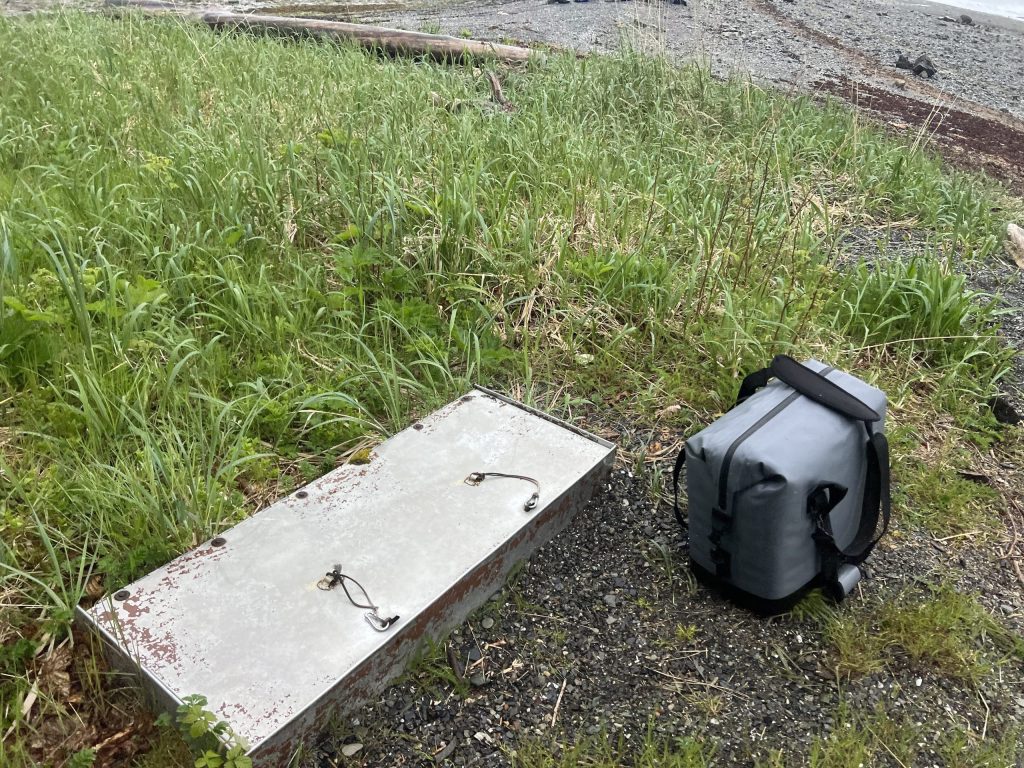
- Food is restricted to the designated area and must be stored in bear lockers
Official arrival information is available from the U.S. Forest Service on this Pack Creek Wildlife Viewing Site page
11. Seasonality vs. Permit Season
Permits are required from April 1 – September 30, but bear activity follows seasonal patterns that are important for planning a visit.
Most Consistent Viewing Windows
Based on long-term site patterns and Juneau-area operations, the most reliable bear viewing at Pack Creek occurs during:
- May – Mid/Late June: Peak sedge feeding, shoreline grazing, mating season, and sightings of sows with new cubs.
- Late July – August: Bear viewing is most active when salmon are spawning in the creek
- Late August – mid-September: Continued salmon season.

12. Camping and Overnighting
- No camping is allowed in the Pack Creek Bear Viewing Area.
- Overnight options exist nearby (Windfall Island, Swan Island, Windfall Harbor).
- Overnight visitors must leave the Pack Creek day-use area by 9 p.m. even when camping elsewhere.
- A boat, plane, or kayak is required to reach an area with camping from the viewing area.
Boaters and kayakers should expect:
- Wet landings (often stepping into 8–16 inches of water)
- Limited mooring options until roughly June 1 – September 10
- Strict food and equipment storage requirements due to high bear density
Official camping information is available from the U.S. Forest Service on this Pack Creek Wildlife Viewing Site page
13. Visitor Rules & Etiquette
- Follow ranger or guide direction at all times
- Move quietly and predictably
- Keep food only in permitted areas
- Stay within the defined visitor-use zone
- Never approach bears or block their travel routes
- Prepare for fast-changing weather conditions
14. Official Sources
- Wild Coast Excursions – Pack Creek Bear Viewing Overview
- Recreation.gov – Pack Creek Bear Viewing Area
- U.S. Forest Service – Tongass National Forest (Pack Creek Wildlife Viewing Site)
- Alaska Department of Fish & Game – Pack Creek / Stan Price Sanctuary resources (includes some outdated information)
Pack Creek Bear Viewing Permit FAQ
Do I need a permit to visit Pack Creek?
Yes. All visitors to the Pack Creek Bear Viewing Area on Admiralty Island must have a day-use permit from April 1 to September 30. This applies to both independent travelers and those visiting with a permitted commercial operator.
When do Pack Creek permits go on sale?
Public permits for the entire season are released each year on February 1 through Recreation.gov. Public permits for popular dates often sell out quickly.
How many permits are available each day at Pack Creek?
Pack Creek is limited to 24 total visitors per day. Public and commercial permits are split roughly in half on a weekly average.
How much does a Pack Creek permit cost?
A Pack Creek day-use permit costs $60 per person, plus a $6 non-refundable reservation fee per transaction.
Do I need a guide to visit Pack Creek?
Guides are not required. However, many visitors choose a guided trip for logistics, safety, transportation, gear, site-flow support, and to ensure a rich and responsible wildlife viewing experience. Only a small number of USFS-permitted operators are authorized to guide at Pack Creek.
What areas can I access with a Pack Creek permit?
A permit allows access to the South Spit, the Viewing Spit, and the Observation Tower. Visitors may be at Pack Creek from 9 a.m. to 9 p.m. on the date listed.
Are rangers always present at Pack Creek?
Rangers are typically on site from June 1 to September 10. Early May and late September staffing varies depending on USFS resources.
When is the best time to visit Pack Creek for bear viewing?
The most consistent viewing occurs from May to mid/late June, and from late July to mid-September.
Can I camp at Pack Creek?
No. Camping is not allowed within the Pack Creek Bear Viewing Area. Camping is available only at nearby locations such as Windfall Island, Swan Island, and Windfall Harbor. A boat, plane, or kayak is required to reach camping areas.
How do I get to Pack Creek?
Most visitors arrive by floatplane from Juneau, typically a 25–30 minute flight. Boat and kayak access are possible but require careful planning around tides and mooring restrictions.
Do I need special equipment at Pack Creek?
Yes. Access involves a wet beach landing and no on-site shelter. Waterproof outerwear, rubber boots, and bear-safe food storage are important. Guided trips typically provide all required gear.
Related Pack Creek Guides
- Complete Pack Creek Bear Viewing Guide
- What to Expect at Pack Creek
- Juneau’s Best Bear Viewing: Pack Creek and Waterfall Creek
- Best time to See Bears in Juneau
For practical details on logistics, transportation, and gear, see our Pack Creek Bear Viewing Page.