What to Expect at Pack Creek (2026 Guide)
Key Facts
- Location: Pack Creek Bear Viewing Area, Admiralty Island (Kootznoowoo Wilderness)
- Access: Floatplane, boat or sea kayak
- Permit Required: April 1–September 30 (Read the Complete Guide to Pack Creek Permits)
- Daily Visitor Limit: 24 total visitors per day
- Ranger Presence: Generally June 1–September 10 (increasing in May as well)
- Viewing Areas: South Spit, Viewing Spit, Observation Tower
- Walking Distance: ~⅓ mile beach walk; ~1 mile forest trail
- Facilities: No shelter, no restrooms, bear-proof food lockers only
- Landing: Disembark into water; rubber boots required
- Food Rules: Strict USFS food storage & labeling requirements
Overview
Pack Creek is more than a bear viewing site — it is one of the most remarkable protected wildlife experiences anywhere in Alaska, shaped by generations of public land managers, tribal stewardship, conservationists, and the local people who have dedicated their careers to safeguarding Admiralty Island’s brown bears.
Situated within the Kootznoowoo Wilderness, Pack Creek remains intentionally minimal: no platforms, no fences, no visitor centers, and no webcams. Just forest, tide, meadow, and bears moving through their home as they always have.
Rangers and permitted guides work to maintain this delicate balance — keeping visitors safe, minimizing disturbance, and reinforcing the respectful behaviors that make Pack Creek one of the few places on Earth where brown bears and people coexist peacefully.
This guide explains what your day will look like: the landing, orientation, movement through the site, bear behavior, tide influences, and the gentle but powerful rhythms that define a day at Pack Creek.

Arrival at Pack Creek
Floatplane Arrival (Most Common)
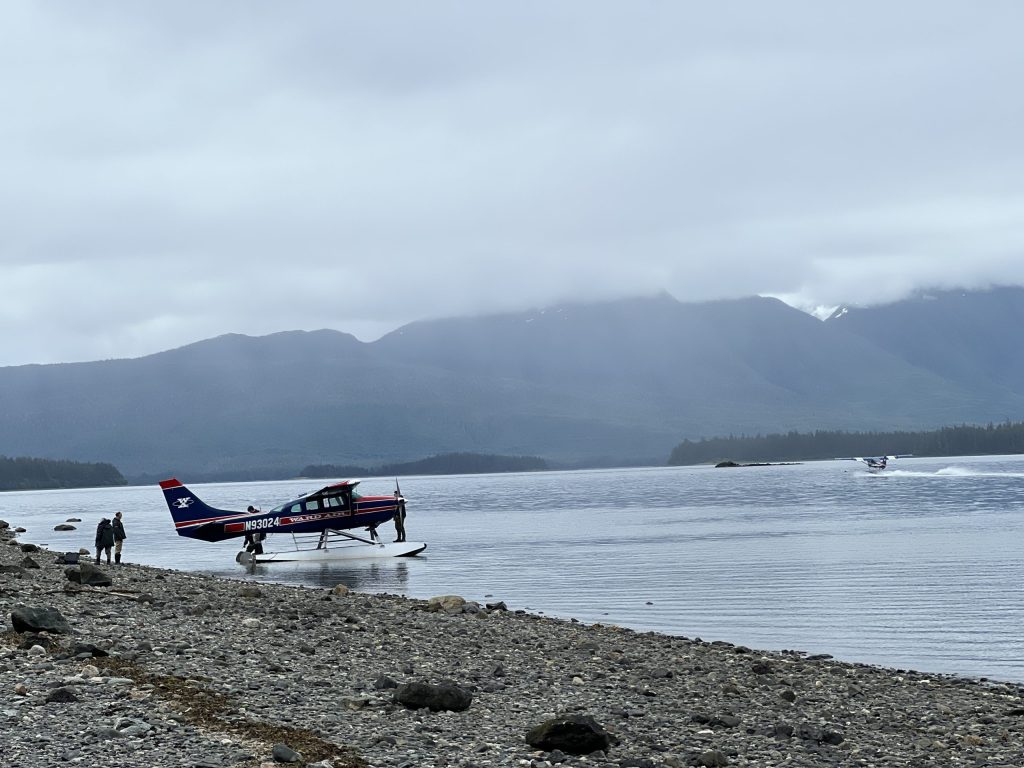
Most visitors reach Pack Creek by floatplane from Juneau — a scenic 25–30 minute flight across deeply forested islands and quiet inlets of the Tongass.
Arrivals are tide-dependent. A large sandbar at mid-tide requires aircraft to approach carefully. Pilots prefer to time landings and departures with the tide cycle to ensure safe access; on an outgoing tide, additional care is taken to avoid shallow water.
You will step out into shallow saltwater at the South Spit.
There is no dock, so rubber boots or chest waders are mandatory at all tides.
This simple act — stepping from the plane into the sea — sets the tone for the day: you are entering a true wilderness, humbly and on the bears’ terms.
USFS notes that high winds and poor visibility can occasionally delay or cancel flights, so visitors should be prepared with extra layers, snacks, and patience if weather conditions shift.
Boat or Kayak Arrival
Visitors also arrive by private boat or kayak, especially in settled weather. While the route across Seymour Canal is often calm, conditions can change quickly, and care should be taken with tides, currents, and wind forecasts.
From the USFS guidelines:
- Anchoring: Boats may anchor south of the marked buoys in Pack Creek.
- Buoys: The visible buoys are not for public mooring; boats may not tie to them.
- Outhaul Lines: Kayaks and small craft may secure to the outhaul lines that extend from the beach, allowing boats to stay off the sand during changing tides.
- Tides: Large tidal swings can either compress or expose the beach walking area. Low tides may require crossing soft sediment; high tides may temporarily reduce walking routes.
- Wet Landing: All arrivals involve stepping into the water — rubber boots are essential.
Regardless of how you reach Pack Creek, all visitors enter through the South Spit and follow the same rules designed to protect the animals who live here.

Mandatory Ranger Orientation
During staffed periods (typically June–Sept, with increased coverage in May), all visitors receive a short orientation During staffed periods (traditionally June 1–September 10, though rangers increasingly aim to be present in May), every visitor receives a brief but meaningful orientation.
Rangers explain:
- wildlife travel corridors
- food storage rules
- how visitors rotate between viewing areas
- safe spacing around bears
- how to move quietly and predictably
- how to maintain Pack Creek’s extraordinary record of safe coexistence
This orientation is not a formality — it is a transfer of stewardship. Rangers share the hard-earned knowledge that allows humans to be tolerated here with minimal impact.
Visitors must follow all Pack Creek rules whether rangers are present or not.
Pack Creek’s Viewing Areas
South Spit
Your landing site and the only place where food can be accessed. The area includes:
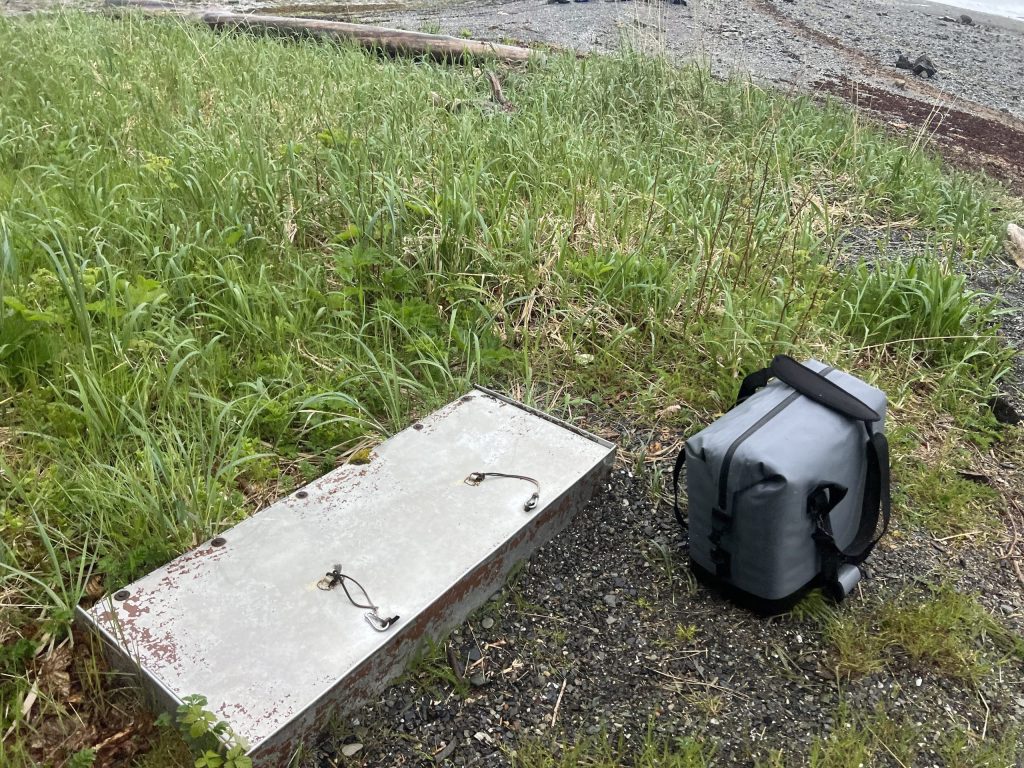
- bear-proof food lockers
- tidal flats where bears sometimes dig for shellfish
- access point to the Viewing Spit and the Observation Tower trail
The sound of the floatplane departing and the tide beginning its work across the flats marks the start of the Pack Creek experience.
Viewing Spit
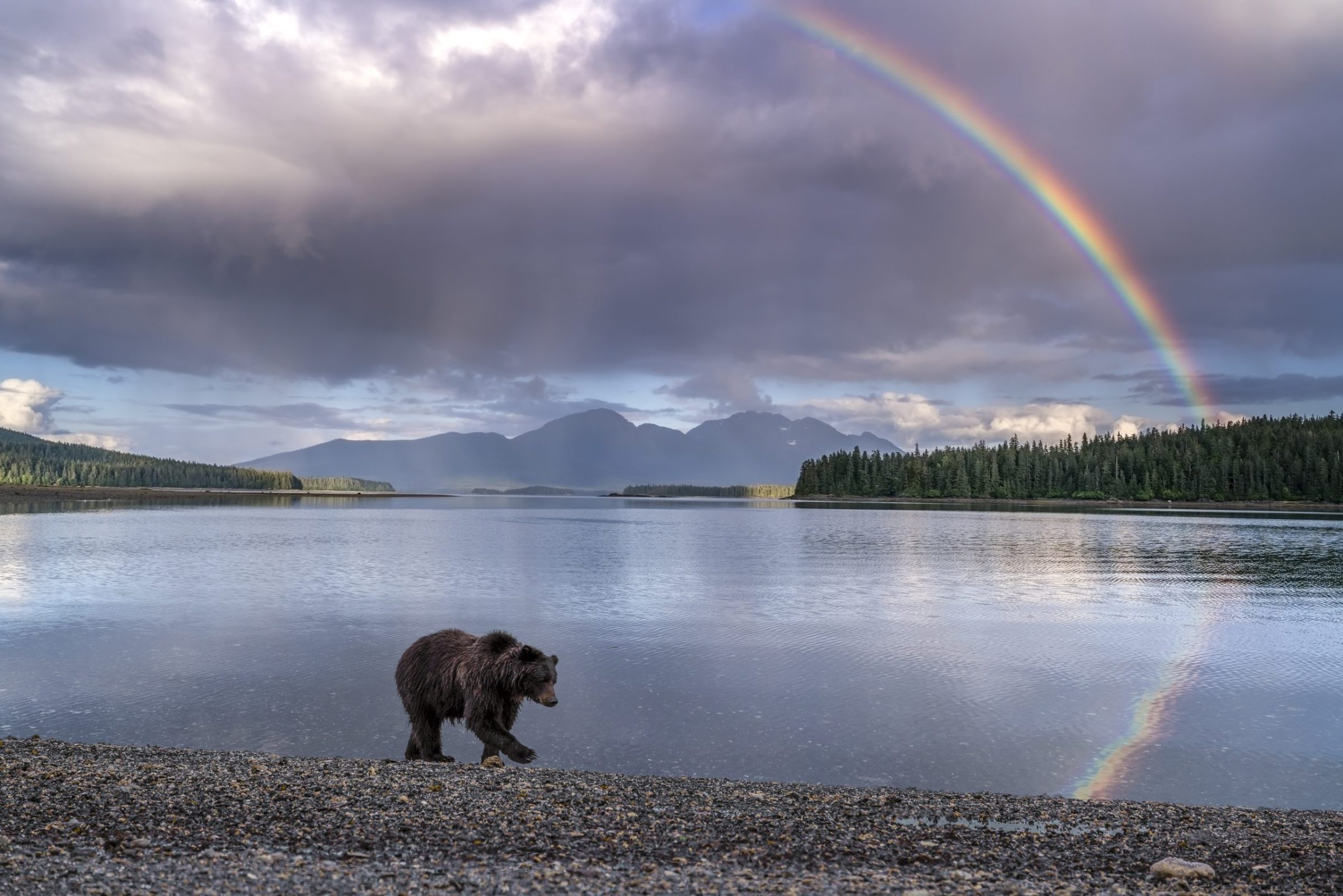
A short walk from the landing, the Viewing Spit is a broad estuary meadow where bears graze on sedges in spring and early summer.
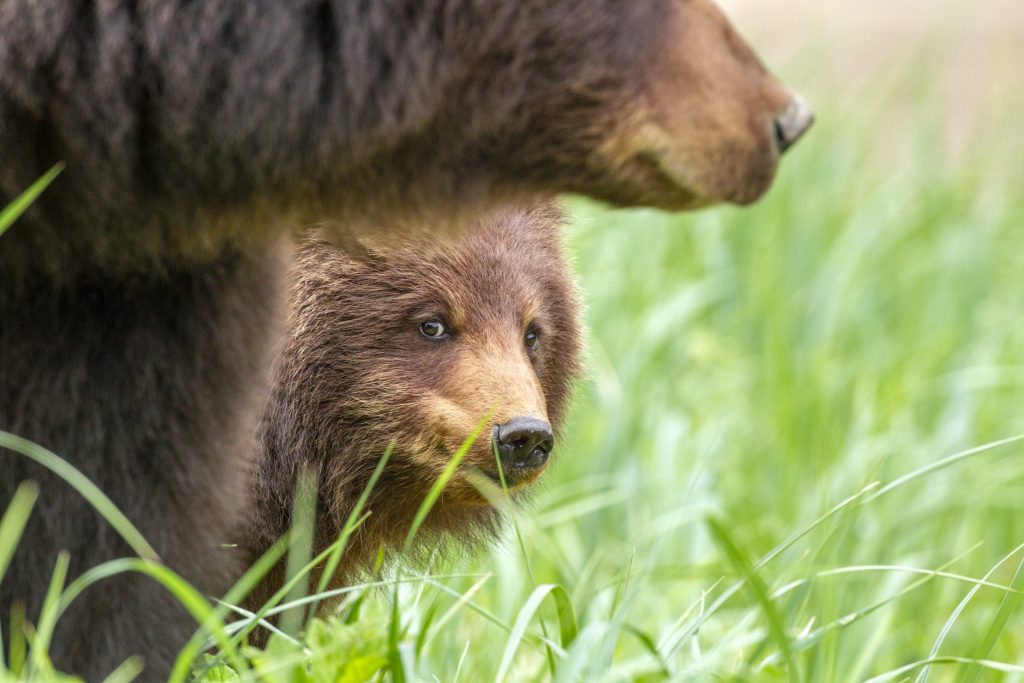
Pack Creek’s estuary lies within one of the densest brown bear populations on Earth, with bears frequently visible grazing, clamming, and fishing throughout the day.
You may see:
- spring sedge grazing
- bears traveling between meadow & tidal channels
- resting bears in meadow fringes
- excellent visibility in early season
- salmon-driven movement midsummer onward
Later in the summer, as salmon move into the creek system, the Viewing Spit remains a major travel corridor.

Observation Tower
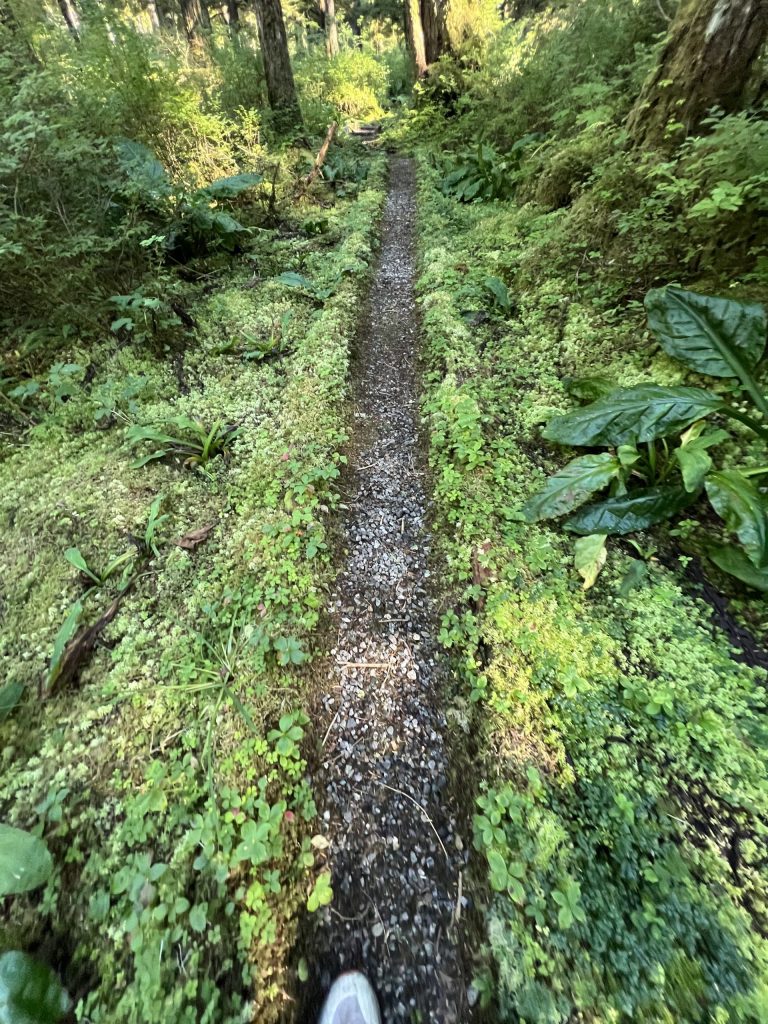
The journey inland to the tower is a walk through old-growth Tongass rainforest — spruce and hemlock rising from moss-covered ground.
The trail is over one mile. The walk typically takes at least an hour each way to accommodate safe, quiet travel through bear habitat.
The tower provides:
- elevated views over the creek
- excellent late-season salmon watching
- a peaceful, forested setting removed from the coast
This change in landscape — meadow to forest — reveals the variety of habitats the bears use through the year.
The walk typically takes at least an hour each way to accommodate safe, quiet travel through bear habitat.
How Visitors Move Through the Site
Pack Creek is not a boardwalk or a zoo-style viewing platform; it is congressionally designated wilderness and visitors must follow site protocols enforced by USFS and ADF&G staff, including ranger direction during staffed periods. Pack Creek is a place shaped by wildlife behavior, tide levels, and long-established human practices designed to minimize disturbance.
Movement is influenced by:
- tide cycles
- where bears choose to travel
- Ranger and guide direction
- safe spacing between all groups
- the need to stay quiet and predictable
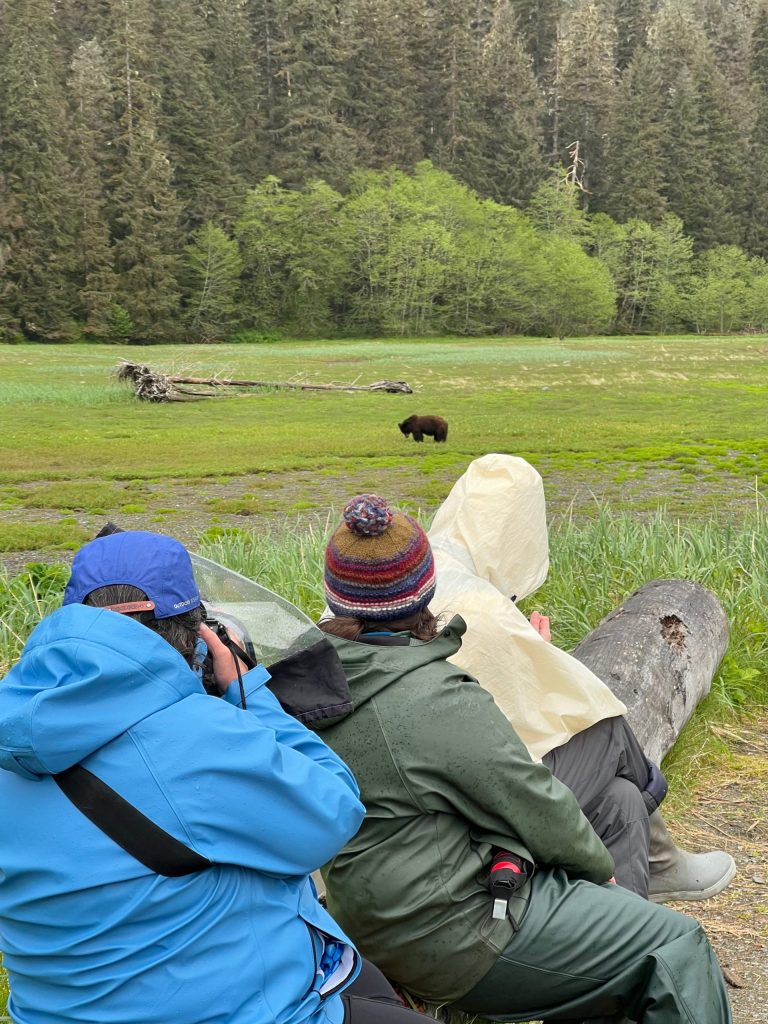
Visitors often spend long stretches sitting, observing, and attuning to the rhythms of the place. Wildlife viewing can be slow and patient, then suddenly full of action! It is a genuinely wild experience.
What You’ll See Through the Season
May–June 20
- sedge grazing
- shoreline feeding
- mating season
- sows with new cubs (“cubs of the year”)
- multiple bears visible at lower tides
- fewer visitors, days when you’re the only people for many miles
Late July–August
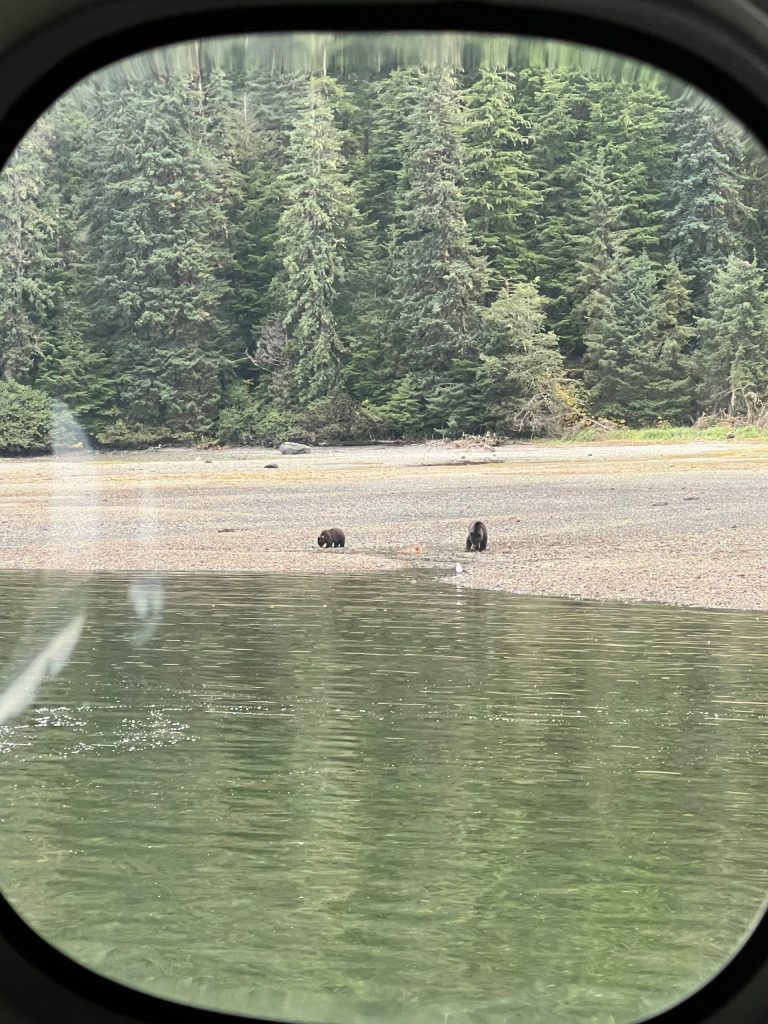
Peak bear activity often coincides with returning pink and chum salmon runs, which vary year to year and influence when bears concentrate.
- salmon arrival influences activity
- bears shifting between creek, meadow, & forest
- viewing at on the shore and possibly at the tower
Late August–Mid-September
- continued salmon fishing
- strong creek activity
- consistent viewing at the viewing spit
- fewer visitors
April & Late September
- variable bear activity
- rapidly changing weather
- shoulder-season challenges
Facilities & Food Rules
No Shelter or Restrooms
Visitors must be prepared for:
- rain, wind, fog, sun
- sitting or standing outdoors for extended periods
- possible flight delays (including rare overnight delay)
Portable toilets are not allowed. Visitors must use the beach and pack out all tissue.
Bear-Proof Food Lockers
All food must:
- be stored in lockers
- be bagged & labeled with your name
- be eaten only at South Spit
- never be carried to the Viewing Spit or Tower
These rules are foundational to Pack Creek’s long-term success.
Gear & Clothing
Recommended:
- appropriate footwear
- waterproof layers
- insulation
- dry bags
- binoculars or spotting scope
- camera with a large zoom
- lunch, water, and extra food if delayed
- any medications you need daily
Guided trips generally provide required gear.
Safety, Bear Behavior & Wildlife Etiquette
Pack Creek is successful because visitors reinforce — not challenge — the established bear habituation patterns. That means practicing behaviors that are respectful, predictable, and quiet.
At Pack Creek, bears are wild and unpredictable — behaving calmly here is not due to habituation alone, but because visitors and staff have learned for decades to move respectfully and predictably in bear habitat.
Expect to:
- move slowly and avoid sudden direction changes
- give bears clear travel routes
- never approach resting or sleeping wildlife
- keep packs and equipment secured and away from animals
- stay within designated viewing zones
- speak quietly and minimally
- sit or stand in small, consistent clusters
Bears always have the right-of-way.
If a bear wants to travel the beach, the meadow, or the forest trail, your group moves aside calmly and gives it room. Practice “co-dominance” and don’t retreat from bears, giving them room to pass by is enough.
These behaviors help ensure Pack Creek remains one of the few places where brown bears tolerate nearby humans with little stress.
Other Prohibited Activities at Pack Creek
Prohibited activities at Pack Creek include drones (UAS), fishing within the viewing area, pets, hunting, and fires, all of which are banned to protect wildlife and visitor safety.
How Long You’ll Spend at Pack Creek
Most visitors spend 3–5 hours on site.
Wind, fog, and visibility can delay aircraft. Late-season storms may extend the visit until pilots can safely land. Always be prepared to spend the night and do not expect assistance from Rangers outside of the peak season.
Weather & Tides at Pack Creek
The Tongass is a temperate rainforest the weather is dynamic.
Many visitors are curious to discover that Admiralty’s brown bears actually prefer cool, often wet weather to warm sunny days. Warm sunny periods are often the times of least viewing activity.
It is often breezy at the exposed South Spit but calm (to the point of becoming buggy) at the Viewing Spit.
Very high tides (above approximately 16.5 ft) can temporarily restrict travel along the estuary and alter movement patterns within the site.
Expect:
- rain
- fog
- wind
- sun breaks
- shifting clouds
- sudden changes
Tides determine:
- when you can walk the beach
- access to the Viewing Spit
- the timing of arrival & departure
- whether you can walk down-beach during tides over ~16 ft
Rain gear is essential regardless of the forecast.
What Surprises Most Visitors
- The profound quiet
- The natural, unhurried bear behavior
- The absence of infrastructure
- The feeling of being a guest in the bears’ home
- How tides and weather shape every moment
- How much time is spent quietly observing
Pack Creek is not a high-adrenaline wildlife chase — it is a meditation on coexistence.
What a Day at Pack Creek Looks Like (September Video)
Pack Creek FAQ
Do I need a permit to visit Pack Creek?
Yes. A permit is required April 1–September 30. Permits are included on guided trips. For independent groups, they must be purchased on Recration.gov.
Do I need a guide?
Independent travel is allowed, but many visitors choose a guided trip for safety, gear, logistics, transportation and to ensure a rich and responsible wildlife viewing experience.
How long is the walk to the Observation Tower?
A little over one mile each way, usually one hour each direction.
Can I access my food anywhere on site?
No. See Facilities section above.
A
Will I definitely see bears at Pack Creek?
No wildlife is guaranteed. Strong viewing generally May–June 20 and late July through mid-September.
Do I have to walk through water when I arrive?
Yes. All arrivals require stepping into shallow water.
Is Pack Creek suitable for children?
It is wilderness. Families should consider weather, patience, and walking distance. Bear viewing is not recommended for children under 8.
Related Pack Creek Guides
- Pack Creek Complete Guide
- Pack Creek Permit Guide
- Juneau’s Best Bear Viewing: Pack Creek and Waterfall Creek
- When to See Bears in Juneau: A Month-by-Month Guide to Pack Creek & Waterfall Creek
Plan Your Pack Creek Visit
For detailed logistics, flights, gear, and group size options, see our main Pack Creek Bear Viewing Tour overview.
Authoritative Sources & Further Reading
- USFS Pack Creek Wildlife Viewing Site
- USFS Pack Creek Bear Viewing Area (Rules & Orientation)
- ADF&G Pack Creek
- USFS Admiralty Island National Monument / Kootznoowoo Wilderness
- Recreation.gov Permits
- Alaska Wilderness League – Tongass
- Audubon Pack Creek Birding
- Friends of Admiralty Island