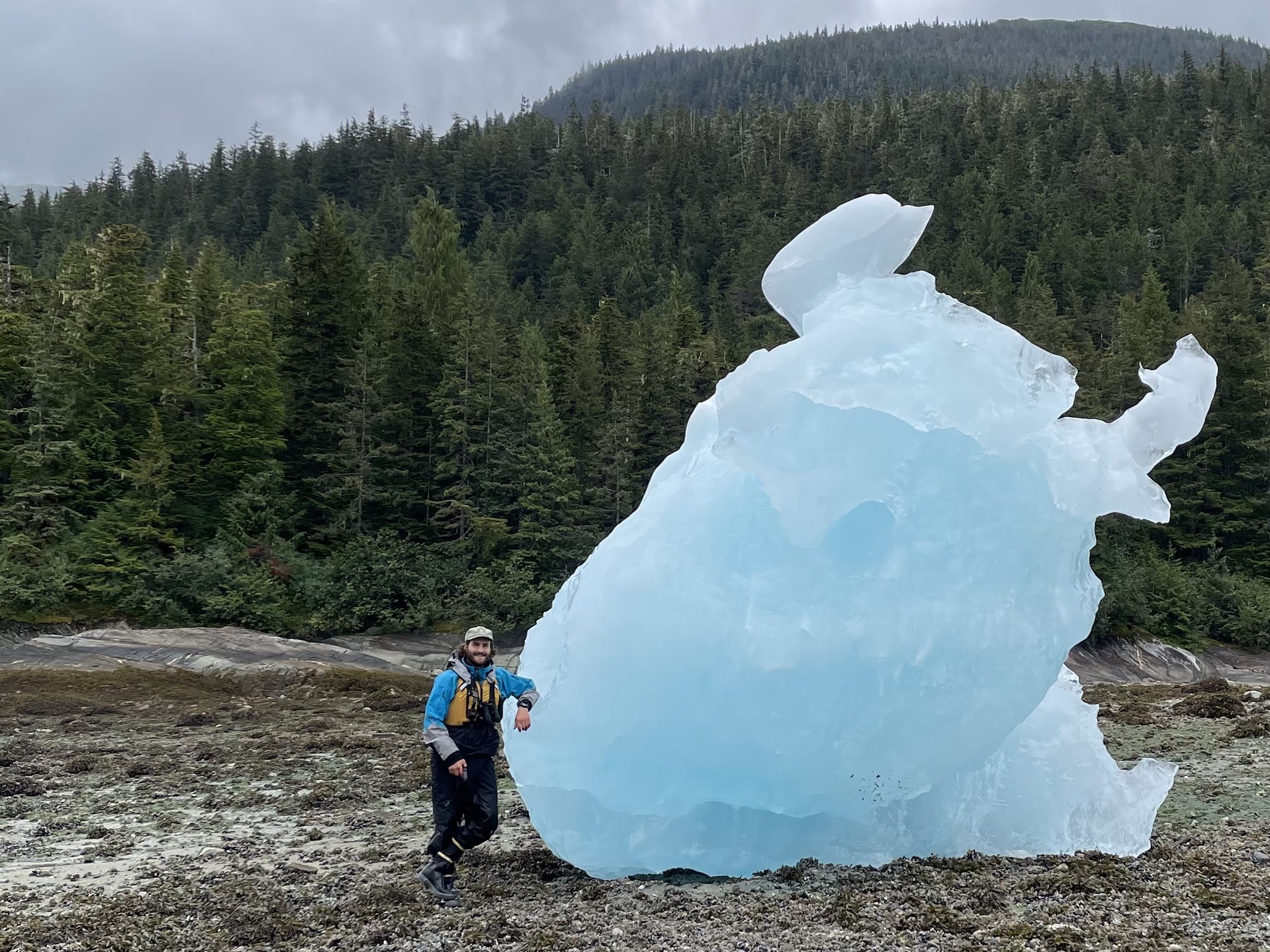
What Bear Viewing at Pack Creek Can Teach Us: A Naturalist’s Perspective
Written by Matt Brodsky, Wild Coast Excursions Lead Bear Viewing Guide and a lover of Pack Creek
Pack Creek is one of Southeast Alaska’s most-storied bear viewing areas, and the only viewing area protected by the Wilderness Act. Only a short floatplane flight away from Juneau, Pack Creek provides visitors the special opportunity to step into a brown bear’s world in a wild and protected setting. This post examines the important connections between brown bears, their neighbors, and their home through a naturalist’s lens.

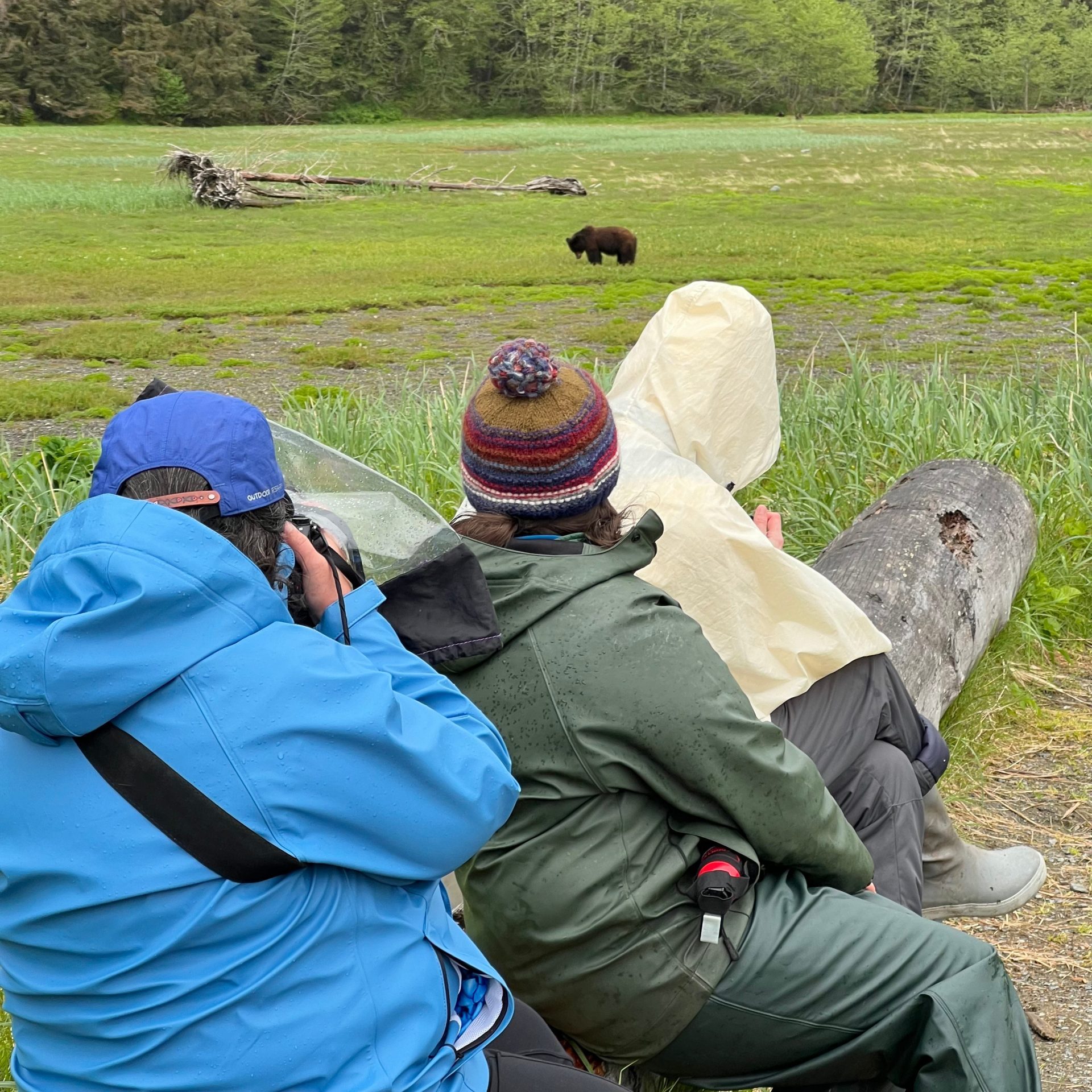
Nestled in the heart of Alaska’s Inside Passage is Xootsnoowú (“brown bear fort”, also known as Admiralty Island), an island encompassing over 1000 square miles of temperate rainforest, rugged alpine peaks, and rich waterways. Along Kanak’aa (“skinny”, Seymour Canal), on its eastern shores lies Pack Creek, a sanctuary where brown bears live without hunting pressure, threat of development, and overt habitat degradation. Pack Creek is a part of a larger, “capital-W” Wilderness Area, which includes a laundry list of laws and regulations, but can be boiled down to one sentiment: a place where humans act with restraint and humility. This idea, when combined with strict people-management principles, results in a place where brown bears and humans can coexist, and where we can learn from these animals through direct observation. Because of this, locals and visitors alike can have powerful takeaways from a day of Pack Creek bear viewing tours.

When you’re face to face with a brown bear for the first, second, or hundredth time, it’s easy to be fully captured by the experience. What I’ve learned, however, is that these incredible animals aren’t the whole picture – they’re a part of a greater symphony playing out, every day, in places like Pack Creek. Without the diversity of habitats, animals, plants, and environmental conditions, this natural symphony would be quiet. A trip to Pack Creek is about more than just seeing bears – it’s also about learning the stories that their world holds. For many visitors, all it takes is a few hours at the Viewing Spit to begin learning from these important stories.
The World of Brown Bears at Pack Creek
When you zoom out, the world of brown bears at Pack Creek contains several habitats, all visible from the logs at the Viewing Spit: subalpine mountain slopes, uplift meadows, temperate rainforest, saltwater estuaries, and tide flats. Each of these habitats plays a part, seasonally, in nurturing brown bears across Xootsnoowú. The various habitats that coastal brown bears rely on for survival are worthy of their own blog post, but it’s important to define what bears call “home” throughout the year.
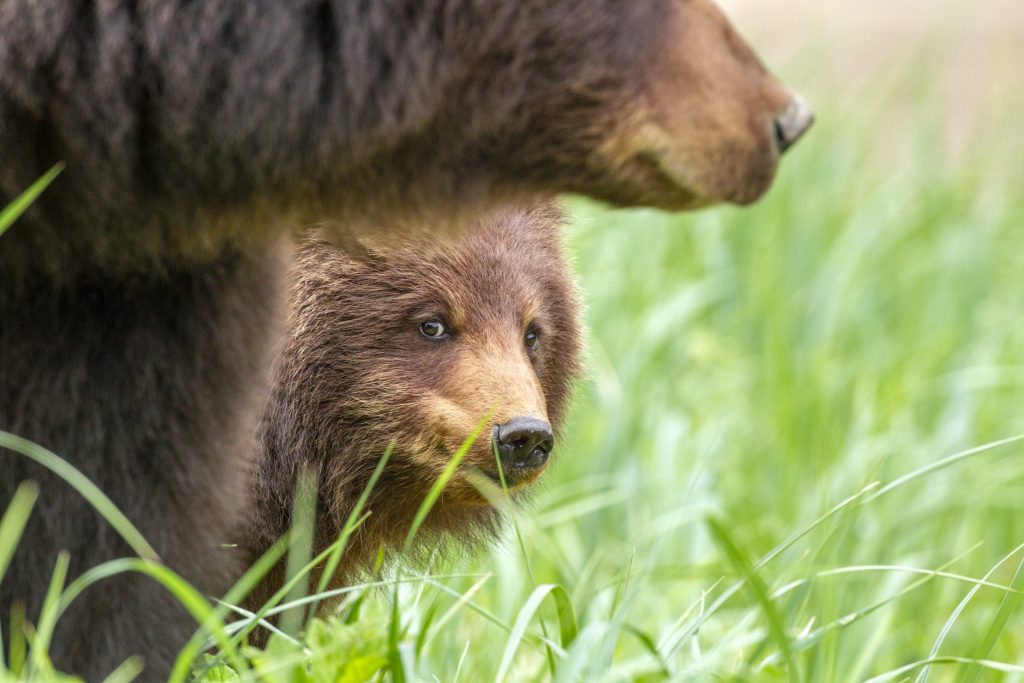
When we visit Pack Creek during the viewing season, “home” looks like the safety and shade provided by large swaths of Sitka Spruce and Western Hemlock. It tastes like the sedge-laden uplift meadows, the cool, salmon-rich waters of Pack Creek, or the sweet berries growing in newly-exposed parts of the forest. It sounds like the rapturous calls of Glaucous-Winged Gulls chasing after spawning salmon, or the soothing song of a Hermit Thrush as the sun begins to set. Bears may be the main character, but the supporting cast at Pack Creek, whether it be the forest, the birds, or the fish, provide the stage.
How Bears at Pack Creek Make it Through Spring
In the spring, two of the more-visible factors that support brown bears at Pack Creek are newly-emerging sedges in the uplift meadow near the Viewing Spit, and bivalves, such as clams, in the tide flat adjacent to Pack Creek. In the spring of 2025, a group and I watched a juvenile male brown bear, emancipated (kicked out) by his mother the spring before, dig for clams in the tide flat near the floatplane dropoff. This bear provided a poignant example of the delicate nature of life in spring: as he tentatively pulled clams from the intertidal muck, he seemed to nervously scan the expansive beach for other, more dominant bears.
Balancing high-quality foods with peace of mind is a major priority for bears at all points of the year, but especially during spring. In spring, food abundance is lower and hormone-driven adult males, known as boars, wander in search of a mate. For a young bear, or a sow with cubs trying to avoid aggressive males, low-tide at Pack Creek balances these needs.

At Pack Creek, sedges, particularly the Lyngbye’s sedge, make up a rather large percentage of a bear’s diet before berries ripen and salmon return to the creek. Throughout the spring and early summer, bears can be seen heavily grazing on large mats of sedge, which is commonly found in the upper-intertidal zone near the Viewing Spit. As the sedge matures and becomes inedible, nature compensates by providing new sources of food: salmon, berries, and a crescendo of ripening forage. As a naturalist, this orderly succession of food sources and a bear’s ability to adapt to them amazes me.
The Importance of Migratory Fish and Birds at Pack Creek
Sitting at the Viewing Spit in mid-July, you can observe a tangible shift in the bear’s world. As a mother Common Merganser and her downy young float by, a large, glistening back emerges from the water with a splash. The salmon have returned. It doesn’t take long for the bears to catch on – environmental clues like calling birds or splashes in the creek, coupled with a bear’s memory of previous salmon runs, tip them off. At Pack Creek, salmon are one of the bears’ most important food sources. Because of this, bear viewing opportunities peak with the return of salmon to their natal streams. For many visitors planning Juneau bear viewing, this is the most active time of the season.

When I think of the quintessential Alaskan brown bear viewing experience, images of fishing bears flash through my mind. I think of a sow – cubs waiting hungrily on the creek-bank – showing the next generation how to read the water’s riffles and find the perfect fish. I think of mischievous subadult bears jockeying for better fishing spots, and quickly learning which more mature bears to steer clear of. I picture an old matriarch clearing out less-dominant bears from the creek as she saunters toward her time-tested fishing hole.
Above all, I think of salmon. In many ways, Pack Creek’s magic is inextricably linked to the presence of salmon. Without this abundant food source, bears would be less tolerant of one another, and certainly our presence. Without salmon, there would be less bald eagles, gulls, and harbor seals in the area. Without the salmon’s critical nutrients, the meadow, forest, and surrounding landscape would look and act dramatically different. When you look closely at the salmon, you can see that they carry the Pack Creek ecosystem on their backs.
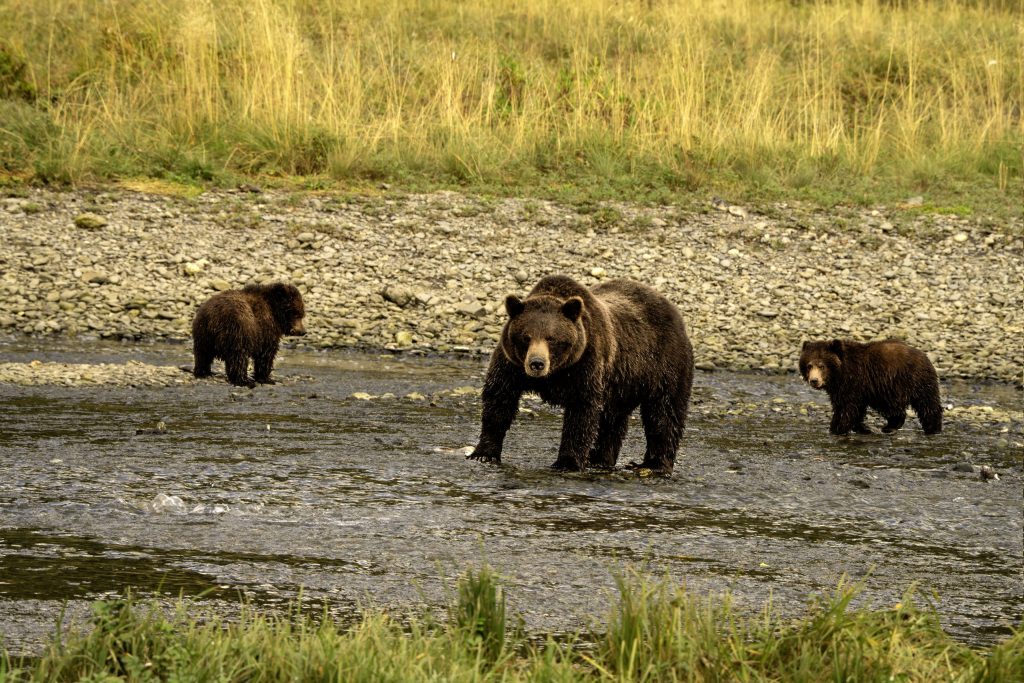
Considering how vital salmon are to Pack Creek and Southeast Alaska at-large, it would be easy to say that summer and fall are solely defined by their return. What’s less obvious is the other important migrators, such as songbirds. The American Robin, a commonly seen bird around the United States, doesn’t exactly inspire thoughts of wilderness. However, one of the first things that comes to mind as I imagine sitting at Pack Creek in early-fall is the robin’s song. Robins, like other songbirds, play a key role in the bear’s world: they disperse seeds. For example, blueberries, a critical food source for brown bears, are inadvertently dispersed throughout the temperate rainforest after birds digest their sweet fruit. A well-placed dropping can end in a bush that supplements a bear’s diet for years to come. In years with low-salmon returns, those same berries become an extremely important food source for hungry bears.

The Pack Creek Ecosystem: Reciprocity Between Bears and Their Home
The bear’s world is a tangled web of relationships with living and non-living factors, but at its core is defined by interconnectedness. By nature, bears are solitary animals, but it’s easy to see how much they rely on their neighbors: the sedge, for nutrition in the first moments of spring; the birds, for moving berry seeds around (and the occasional egg); the salmon, for providing an easy source of fat and protein before winter. Watch bears for any amount of time and you can see these relationships in action. What’s less obvious is their world’s reliance on them. Bears, like birds, are incredible seed dispersers. By moving blueberry seeds around the forest and packaging them in nutrient rich scat, bears directly benefit all animals (including humans!) who eat berries. If you find yourself lucky enough to eat a fresh blueberry from the Pack Creek area, thank a bear.
There is also scientific evidence that points to grazing as being somewhat beneficial to sedge growth (1). Healthier sedge meadows provide a range of benefits from erosion control to habitat for juvenile salmon and their invertebrate prey (2). It might be odd to think that bears benefit salmon at Pack Creek, but when we look closely, the relationship isn’t as one-sided as it appears. By selectively eating the most fatty parts of a fish, bears leave a portion to pass its nutrients to the rivers, wetlands, and forests near them. By investing these nutrients in the habitats around their natal streams, future generations of salmon can benefit from nurtured spawning grounds (3).
Where We Come In
A good naturalist aims to understand relationships in the world around them and their place within them. This begs the question – what’s our relationship to the world of bears at Pack Creek? What can it teach us, and how can we act in reciprocity? By delving deeper with Wild Coast Excursions, we’ll help you find the answer.
Frequently Asked Questions About Pack Creek Bear Viewing
When is the best time to see bears at Pack Creek?
Bear viewing occurs from May through September, with salmon runs in mid-to-late summer offering the most concentrated bear activity.
How do you get to Pack Creek from Juneau?
Pack Creek is accessed by floatplane from Juneau, typically in about 20–30 minutes.
Why are there so many bears on Admiralty Island?
Admiralty Island supports one of the highest densities of brown bears in the world due to abundant salmon, intact habitat, and protected wilderness.
Works Referenced
https://cdnsciencepub.com/doi/abs/10.1139/z94-189
https://accs.uaa.alaska.edu/wp-content/uploads/Wetland_Sedges_Alaska.pdf
https://www.adfg.alaska.gov/index.cfm?adfg=wildlifenews.view_article&articles_id=407