Need Some answers?
Frequently Asked Questions
Bear Viewing
Why go bear viewing with Wild Coast Excursions?
There are three services that offer fly-in bear viewing in Juneau, so why go with Wild Coast?
Wild Coast is guide owned and operated. Owner Peter Nave has been leading groups in the Tongass since 2005, and guiding at Pack Creek since 2013. He personally oversees every guest booking and makes sure each day runs smoothly.
Wild Coast Excursion is the only local guide outfitter to specialize in coastal brown bear viewing. No fishing or kayaking for us! Our guides spend almost every day of the season leading guests bear viewing in the Tongass.
We have expert local guides. Two of our lead guides have served as USFS Wilderness Rangers at Pack Creek and Tracy Arm. Few guides can compete with the experience gained over multiple full seasons living with Southeast Alaska’s bears. Others have been the lead guides and managers of other bear viewing businesses before stepping down to work with Wild Coast. You will not be disappointed with our guides!
Wild Coast Excursions also offers the best equipment in town, the only catered lunch from a local cafe, and the smallest minimum group sizes (2).
Who Can Go Bear Viewing?
Guests on our group trips must be 12 years or older. Guests on private trips must be at least 8 years old. Bear viewing is a mostly sedentary activity that requires us to be patient and relatively quiet for long periods.
For all bear viewing trips: guests need to be able to disembark a floatplane into up to knee-deep water, and then walk up a slippery and sometimes rough beach. Once on land, all guests need to be able to walk along the beach for up to a mile to access the bear viewing areas. Guests with mobility issues should contact us at booking time.
For group Pack Creek trips: guests need to be able to walk up to two miles along a forest trail to reach the upper creek viewing area.
What’s the difference between Pack Creek and Waterfall Creek?
The biggest difference is that we primarily visit Waterfall Creek during the peak of the salmon run in July and August, and we visit Pack Creek in all other months of the summer.
Admiralty, Baranof, and Chichagof Islands (the ABC Islands) have the highest concentration of brown bears in the world! All three islands contain remarkable wilderness settings with deep cultural histories.
Pack Creek is a specially designated bear viewing site within the Kootznoowoo Wilderness of the Admiralty Island National Monument. Known as Xootnoowú, or the Fortress of the Bears, in Lingít (Tlingit). Pack Creek has been popular as a bear viewing destination since it was closed to hunting the 1930s. Pack Creek is co-managed by the US Forest Service and Alaska Department of Fish and Game. It has strict permit requirements and daily limits on the number of visitors. Trips to Pack Creek need to be arranged well in advance to secure the permits required. We visit Pack Creek in May and June when the bears are foraging in the estuary and mating, as well as late August through September.
Waterfall Creek is on Chichagof Island. Tucked away in a pristine corner of the largest of the ABC islands. This area has become locally famous for bear viewing because of the large salmon runs that congregate at the base of a beautiful waterfall, easy targets for groups of hungry bears! We visit Waterfall Creek for the amazing bear viewing there while the salmon are running in July and August. Waterfall Creek is a slightly longer flight from Juneau than Pack Creek, but we’re able to visit with a bit less notice due to the more relaxed permit requirements.
What is included on my bear viewing tour?
All transportation from downtown Juneau to the airport, round trip flights from Juneau to the remote bear viewing sites, a healthy lunch, rain gear, rubber boots, waterproof backpacks, binoculars, spotting scope with tripod, bear spray, all permits, and an expert local guide.
What is not included?
Gratuity for your guide or pilot. Guaranteed bear sightings (they’re wild animals).
What should I bring? What should I wear?
We recommend each group bring at least one camera, any vital medications, and that you dress in warm layers that can be adjusted as the weather and activity level changes. Bear viewing is a fairly sedentary (and sometimes wet) activity. Wool and fleece layers are usually a smart choice. You will be wearing rubber boots so please wear comfortable socks. Hat and sunglasses are also recommended, even on cloudy days.
If you need new layers or outerwear for your trip, we recommend Foggy Mountain Shop in downtown Juneau.
What should I not bring?
You should not bring unnecessary scented items like food, lotions, and creams. You should not bring anything bulky that you cannot easily carry with you at all times. Extra items can be left in our vehicle in Juneau.
How big are the groups? What’s the minimum and maximum group size?
This is no bus tour! Most groups are 2-6 guests with one guide. We have the smallest minimum group size in the industry at 2 guests. For large groups, our wilderness permits allow us to accommodate up to 11 guests at once.
What fitness level is required?
Guests on group trips should be ‘moderately’ fit. At the beach, guests will need to disembark the plane into about a foot of water on uneven ground. Once on dry land, the beach can be rough and slippery for a long distance. Guests should be able to walk on this tricky ground for up to a mile. If you have any doubts or questions, please reach out to us.
Traveling with Wild Coast
What makes Wild Coast different?
We Are Alaskan! We prioritize an authentic and cultural connection to SE Alaska for our visitors over the ‘industrial’ offerings of other operators. Our small family owned business offers an attention to our guests that larger operations simply cannot offer. Our trips are centered in SE Alaska, led by Alaskans, and we work to preserve and respect both the areas we visit and the cultures that have existed here for countless generations.
Besides the quality and authenticity of the experience, all of our trips are carbon-negative, and have a positive impact on the communities that we operate in. We are Juneau’s only member of the 1% For the Planet program, and our partnership with the Alaska Carbon Offset Fund is a first in Alaska (but we hope it catches on)!
Who are your trips for?
Our trips are for anyone who wants to trade visitor centers and gift shops for bears, old growth forests, and mountain peaks, and experience the real Alaska. We welcome everyone and will do whatever we can to accommodate those with unique needs!
Many visitors join us as part of a week long trip aboard a cruise ship or charter vessel. Our trips are all around 6 hours long which works easily with most vessel’s schedules. We also get guests flying in and out of Juneau to spend multiple days with us, or laying over to go to a fishing lodge or small ship cruise. If you’re coming to Juneau, most likely we can make something work with your schedule!
Do you provide multi-day bear viewing trips?
For our guests who are real enthusiasts, we love providing multi-day wilderness experiences visiting 2 or more of our best bear viewing areas. Multi-day guests receive a discount on their individual day trips!
Should I book a private tour?
Mixing with other likeminded travelers can be one of the joys of seeing the world. However if you have unique needs, already have a large group, or know that you would enjoy more personal attention from us, we would be happy to offer you a private trip! Please reach out to us with your dates and the number of guests in your group.
What types of customizations do you offer for private trips?
For bear viewing, we can arrange special pick up locations around SE Alaska, special meals, extra staff to accommodate physical disabilities, flightseeing over the Juneau Icefield and unique trip lengths.
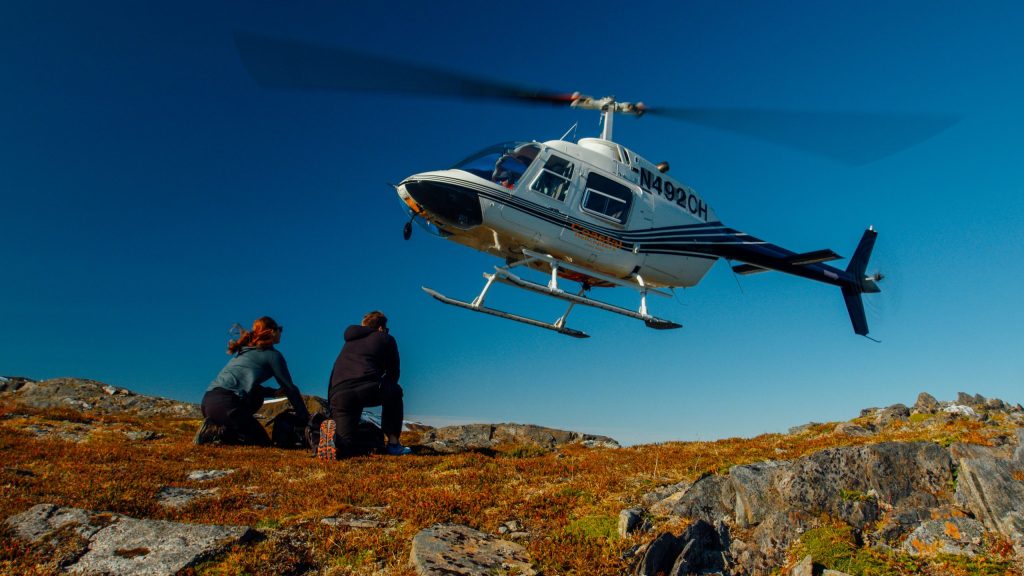
For our heli-hiking trips, we are able to offer special meals, elopements and ceremonies, photo shoots, lake swims, corporate events, you name it, we can make it happen.
We are also happy to coordinate with other travel providers for combination itineraries, special events, and private transfers to neighboring towns, ships and locations.
We are traveling through SE Alaska on a yacht, can you customize a tour for our vessel?
Yes! Wild Coast Excursions specializes in remote wilderness and nature tours. Our wilderness permits cover most of our region, and as locals we are intimately familiar with its highlights.
For bear viewing and wilderness trekking, we can either meet vessels near one of our main viewing areas, meet near one of our more remote and ‘off the beaten path’ areas, or pick up groups by floatplane. We often do a combination of these things for incredible, custom 2-3 day wilderness itineraries.
We also fly groups from remote anchorages to glacier trekking and flightseeing areas in Glacier Bay and the Juneau Icefield.
Should I tip my guide?
In Alaska it is common to leave a gratuity for guides (and customer service workers) who you feel have given you excellent service. Our guides are industry leaders with many years of experience and it is their goal to provide you with the best experience and service possible. If you feel that they’ve given you this service, they will appreciate a tip. Gratuities frequently range from 5-20% of your trip’s cost.
What are your booking and cancellation policies?
- To secure bookings and acquire your permits, we need a payment in full at the time of booking. We recommend booking early as our trip availability is extremely limited.
- We will gladly work with you to reschedule if needed. The more notice you can give us the better!
- If you need to cancel your trip entirely, this is our cancellation policy:
- For cancellations 60+ days before your trip: a full refund (minus a $100 per person non-refundable permit fee for Pack Creek trips)
- For cancellations 59-30 days before: a 50% refund of the cost of your trip
- Cancellations less than 30 days before your trip are non-refundable
- If we cancel your trip for any reason (including minimum group numbers or unsafe weather), guests will receive a full refund (minus a $100 per person non-refundable permit fee for Pack Creek trips).
What happens if we can’t fly when our trip is scheduled?
We will do everything we can to reschedule your trip. If we are not able to reschedule and your trip can’t go because of weather, we will issue you a full refund (minus a $100 non-refundable permit fee for Pack Creek trips).
Traveling in SE Alaska
How do I get to Juneau?
If you’re reading this then you have two options, by boat, or by plane! You can fly to Juneau directly with Alaska Airlines from Anchorage or Seattle. Either flight is 1.5-2.5 hours. If you’re already “nearby” you can also fly from smaller towns within the region with Alaska Airlines, Alaska Seaplanes, or on a charter from Ward Air (which we’re happy to arrange).
A large number of Wild Coast Excursions guests fly to Juneau, and are in town for a few days on either end of a small-ship cruise, yacht charter, or trip to Glacier Bay. These short windows are perfect for a bear viewing day trip!
Many visitors travel to SE Alaska and Juneau aboard a major cruise ship. These floating marvels visit many ports for a day, just enough time for an escape into the wilderness with us!
Another lesser know option is our Alaska Marine Highway. These legendary “Blue Canoes” connect SE Alaska towns big and small. Some start and end in Haines, Skagway, Southcentral Alaska, Prince Rupert, BC, and Bellingham, WA offering a connection to those coming from out of state. We highly recommend this authentic experience and are happy to offer advice about traveling aboard the ferries!
When are the best months to come?
Visitor season is generally early May to late September. Bears are active (and mating) along the beaches in May and the first half of June before they disperse in pursuit of increasing food options. They return to the beaches and streams in late July when the salmon begin spawning.
Peak bear viewing season is from late July through early September.
What’s the best way to see SE Alaska
Like reaching SE Alaska from outside the state, travel within our water rich region is primarily by air and sea. Visitors who wish to see more than one town should expect to do a combination of both.
Alaska State Ferries are the standard for connecting from one community to another, but schedules fluctuate seasonally and some communities receive few stops each month. Haines and Skagway receive the most service from Juneau, and there are ferries both directions most days, making this an easy and rewarding detour.
Alaska Air connects Sitka, Ketchikan, and Gustavus (for Glacier Bay NP), to Juneau. Most other communities are connected by scheduled flights with Alaska Seaplanes. Beware that even scheduled flights are relatively expensive compared to the ferries! If you have a group you should consider a charter with Ward Air for a potentially better price.
What if I want to explore beyond the towns?!
Then you’ve come to the right place. Our wilderness tours connect visitors to remote and wild Alaska daily. We then return you to the comforts our Juneau each evening. Our towns are charming and real, but Alaska cannot be experienced without escaping into the wilderness!
We also recommend longer wilderness trips into and across SE Alaska. There are several options for this including fishing lodges, remote multi-day sea kayaking routes, and luxury charter vessel. We’re happy to offer specific advice and share our experiences with these options.
A great place to start is with the folks at Alaska Yacht Charters and the crew of the Alaskan Story! Ryan and his crew are the best in the business and we always look forward to working with his guests!
Prioritizing Safety
Are your wilderness trips safe?
Safety is the foundation of our business! As experienced guides and SE Alaska locals, we know the dangers of wilderness travel and being in close proximity to wildlife. We mitigate these hazards before we ever encounter them and prioritize our guest’s safety starting well before we pick you up!
All guests will receive a safety briefing from their guide specific to their trip before they depart the airport. Guides carry all necessary safety equipment including satellite communication devices, first aid kits, emergency shelter, and bear spray.
Our Carbon Negativity
What is carbon negative?
A business or organization is considered carbon neutral if there is a balance between the carbon that they emit, and the carbon that they absorb or sink. This encourages them to produce less, so they have less to sink.
Carbon negative organizations sink more than they produce for a net environmental benefit.
How is Wild Coast Excursions carbon negative?
We’ve partnered with the Alaska Carbon Reduction Fund to make our trips carbon negative. We buy ‘reductions’ from them for 125% of the assessed footprint of our trips. Read more about this program on this page!
How does the Alaska Carbon Reduction Fund create the “reductions” that you use?
The Alaska Carbon Reduction Fund uses the funds we pay them to purchase and install high efficiency electric heat pumps into low income homes. By replacing traditional oil burning heating systems, they represent a large reduction in CO2 created by those households and operate at a fraction of the cost for the families using them. You can read more about this program on this page!