

Wild Coast in the Press
Wild Coast Excursions has been featured by national travel, environmental, and outdoor publications covering bear viewing in Southeast Alaska, with particular focus on Waterfall Creek and Pack Creek near Juneau. These articles reflect independent reporting by journalists with experience across Alaska and other leading brown bear viewing regions.
Read Our Features
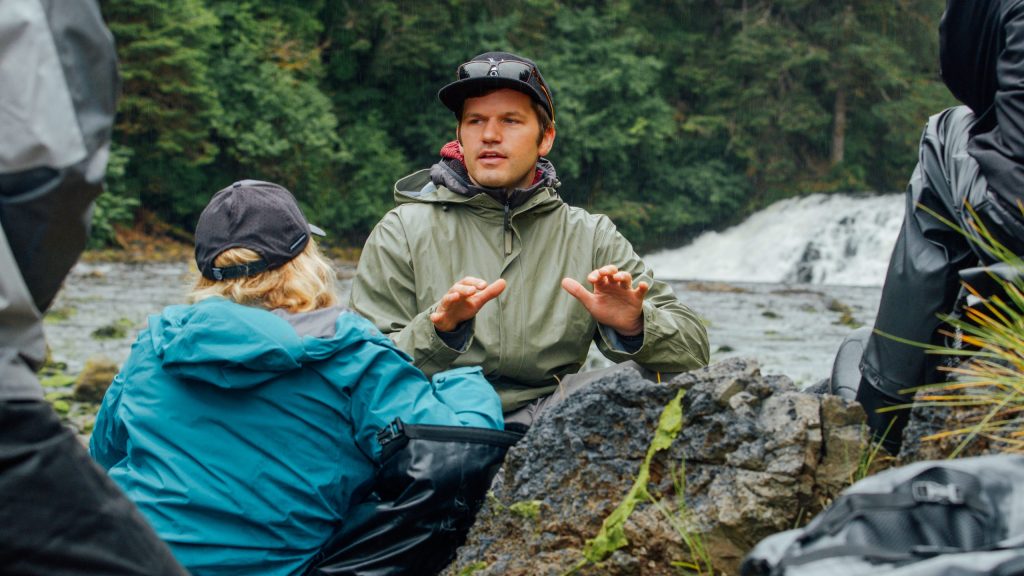
Alaska Uncovered Podcast: Juneau Bear Viewing with Peter Nave
Wild Coast Excursions’ founder Peter Nave was interviewed on the Alaska Uncovered Podcast to talk about wilderness bear viewing near Juneau, including Admiralty Island, Pack Creek, Waterfall Creek, and how seasonality shapes bear behavior in Southeast Alaska.
We covered what makes Juneau unique for brown bear viewing, how fly-in trips actually work, and why timing matters far more than most people realize when planning a bear viewing trip in Alaska.
Topics Discussed in the Episode:
- Why Juneau is a gateway to wilderness brown bear viewing in Southeast Alaska
- Pack Creek bear viewing in spring vs late summer salmon season
- Waterfall Creek and peak-season salmon runs on Chichagof Island
- How fly-in bear viewing trips work from Juneau
- What bear behavior looks like at different times of year
- Weather, rain, and flight reliability in Southeast Alaska
- Permits, group size limits, and why crowding is low compared to places like Katmai
Full Podcast Transcript:
Hi everyone. Today I’m really excited to share a really special bear viewing opportunity if you are heading to Juneau on your trip to Alaska with Peter Nave. And this is was such a wonderful conversation. Before we get into that, I wanted to just remind you if you want to go bear viewing with Jay and I.
We are doing an amazing bear viewing adventure as part of our small group tour to Alaska, authentic Alaska, which is going to be from June 6th to the 14th. We have reopened registration for the last two rooms. It’s a total of nine people max. You can come on your own, you can come with a travel partner.
We would really love to have you. We’ll be closing registration on February 12th. So please ask me your questions. I will put the link to way more information in the show notes
all right. Enjoy the show.
My guest today is Peter Nave. Peter is a born and raised Juneauite and the owner of Wild Coast Excursions, which takes guests on some really cool adventures to see bears in Juneau. We’ll talk about that more in a minute. But for now, Peter, welcome to the podcast. Thank you for being here. Hi. Thanks for having me. Can you tell everybody a little bit about yourself and how you got to Alaska?
I realize I gave it away a little bit there, but, um, just tell everyone a little bit about you and how you got there. Yeah, my pleasure. Um, my name’s Peter. I was born and raised in Juneau, Alaska. I’ve lived in and out of Alaska for my whole life. Um, I’ve been a guide in the Juneau area and in the Tonga National Forest since I was a teenager, which is.
Almost 20 years ago now. Um, and I started Wild Coast Excursions, uh, three or four years ago when the opportunity arose for some, um, kind of once in a lifetime permits to some of the bear viewing areas in Southeast Alaska, uh, specifically on Admiralty Island, uh, which we ended up receiving. And now we are Juneau’s bear viewing specialist.
We’re the only business in town that. Exclusively focuses and, and offers bear viewing, uh, and specifically brown bear viewing. That’s awesome, Peter. Okay, so. As people who listen to this podcast already know, it’s kind of my personal side mission to help people learn about bear viewing opportunities that are not in Katmai and not because capm my isn’t awesome.
It is, but it’s also very busy and a little. Sometimes people are disappointed in their experience because of crowding and a variety of things that make it a little bit challenging. So, um, I am sure many of our listeners have no idea that bear viewing in Juneau is even an option. So can you just talk a little bit more about, um, the excursions that you do and, um, you know why it’s kind of unique in Juneau?
Um, that would be a great place to start. Sure. So we offer exclusively wilderness bear viewing. Um, so we are gonna fly into a wilderness setting, usually in what is locally referred to as the A BC islands, which are admiralty, Bernoff, and Chich Islands, which, um, for wildlife. Focus people are our famous Bear Islands, brown Bear Islands.
Um, so we’ll fly into a wilderness location. There’s no infrastructure, there’s no platforms, um, there’s no bathrooms, uh, is a question. We get a lot. And, uh, and you’re in a remote wilderness setting. And our goal is to encounter, um, and to a certain extent, interact with the bears. In their natural setting and really just kind of fade into the background while they go ar about their daily lives.
Um, that’s probably the goal of most bear viewing trips. Um, but a lot of trips to katmai and other places, uh, revolve around some manmade infrastructure that’s either a platform, um, which is meant to segregate. You know, on larger unguided groups from, from the Bears, um, or it’s a manmade hatchery or something.
Something like that. Yep. Um, and that’s, that’s pretty common. Um, there’s a, a few cases of that in Southeast Alaska for black bears, like outside of Ketchikan. Yeah, yeah. Um, and then of course in Katmai, Brooks Falls specifically has, you know. Like a, an order of magnitude. More people go, um, there every, every year, um, than, than we would get, you know, on some of these whole islands.
And so, yeah, our goal is to, to go and my, our, the lead guide likes to say become a tree, but really just kind of fade into the background for the Bears who, um, we have a few areas, the most popular areas, the bears are habituated to people, so they do see us as part of the scenery. So long as we can behave in this consistent and predictable way.
And they will just move around you as needed. They certainly, they still interact with each other and have their own social hierarchy and everything, but we , we kind of just become more rocks, , which is great. Um, that works out different ways in different places, and we do visit some areas that are less visited and so the bears there wouldn’t be habituated to people.
Um, and that’s really neat remote. Secluded bear viewing, but usually at a further distance because they’re, they’re not as likely to, to be comfortable in your close proximity. Yeah. Yeah. That makes sense. So, Peter, is, are all of your trips fly in trips or do you have any that are boat in? We, uh, when we bring guests from Juneau,, we fly in some of the bear, the, the two main bear viewing areas we access, pack Creek and Waterfall Creek are coastal locations, but.
The way the geography in southeast Alaska is, they’re out and around some really major islands. Um, and so to boat there would take most of a day in Yeah. You know, good conditions and to fly there takes 20 to 25 minutes. Yeah. Um, so it’s, it’s kind of a no brainer. We’d love to offer a boat in trips and, um, Pack Creek, which has a a hundred year history of bear viewing and visitation.
Certainly that’s how people would’ve gotten there back in the day. Um. Mm-hmm. But, uh, but yeah, most bear viewing in Juneau Brown Bear viewing is a, is fly in. Um, we do specifically our business does meet, um, private groups, um, on vessels. So they might be Oh, that’s cool. Traveling around Southeast Alaska, you know, on their own.
And they’ll hire us. But we would most likely still send the guide in by plane from Juneau. Mm-hmm. But we would actually meet guests in different places. Oh, that’s cool. And we still. Meet those folks at, at Pack Creek on Admiralty is, is very popular. Uh, waterfall Creek, which is on Chich off island or other, especially with those folks who kind of have their own mobile setup.
Um, other wilderness locations for sure. Yeah. That’s awesome. So, um, a couple other questions about that. So I’m making the assumption that you’re using, um, float planes for this. Is that the case? Yes. Yeah. Okay. That’s totally the case. Yeah. And can you tell some people who’ve listened to other episodes where we’ve talked about that will know, but can you just talk a little bit about what happens in a flute plane and kind of what that experience is like?
Yeah, absolutely. Uh, we fly with Ward Air, which is, uh, Juneau’s by far, longest standing. Um, Bush and Float play in service. Um, we fly out of the Juneau Airport. Uh, our airport is pretty unique in that there’s a, a runway for Alaska Airlines and so on. And right next to that is the float plane pond, which is a, yeah, manmade lake runway.
Um, so our trips start by meeting guests in town, going to the, the hangar at the airport. We then drive across to the float plane pond. Uh, you load into the float plane there by a dock. Then you make your 20 to 30 minute flight out to the bear viewing area, which is absolutely stunning. Uh, you’re flying across Admiralty Island, which is a national monument.
Um, you know, you’re flying over a big stretch of the ocean. We sometimes see whales, uh, you quite often see bears from the air. It’s, uh, it’s really. It’s really beautiful. Um, and then we’ll land and we outfit all our guests with rubber boots because you’re gonna land and then step out into some water. Yes.
So, and then, and then we walk up to the beach. That’s something else I wanted to ask you about is like if people need rubber boots for waiting, but you’ve got that awesome. They do. I have a very large room on rubber boots. A collection of boots. Yeah, a collection. Yeah. So that’s awesome. So, um. It sounds like if someone has booked a bear viewing trip, they, let’s say they book a trip to Pack Creek, it sounds like there’s a possibility that they would actually go somewhere else on the day of.
Is that, is that true? Or is it like yes or no to this specific location? So we um, uh, some of both, um, we sell location specific group trips, um, and the location that we. Present as an option is usually based on the time of the season. Yep. Bayview is super seasonal and the locations are a big, big part of that.
Um, and then we offer private trips. Um, private trips. I would say you’re more likely to make a last minute pivot from one location to the other. Mm-hmm. Um, and a group trip, I would say we would only make. A change like that, that was unexpected if weather prevented us from flying to one place, but allowed us to get to the other.
Yeah. Which does definitely happen. Um, but again, the, the, the overlap of the locations is not as much, uh, time-wise is not as much as you would think though. Um, usually we’re kind of dedicated. Yeah. For example, Pack Creek has a really fantastic early summer season. Where bears are out on the beaches and eating the sedge.
Um, something similar to what katmai visitors who go to like Hallo Bay might, might see and do. Yeah. Yep. Um, that doesn’t really exist anywhere else in Southeast Alaska. So in May and June, Pack Creek is the only reliable bear view, round bear viewing, um, location. So we, we, we wouldn’t change. Yep. And then in the peak salmon spawning weeks of late summer, then.
There’s more flexibility. Yeah. , But permits are another limiting factor. Yep. Whereas it’s, it’s, it’s not super likely, , on the busiest days that you can just switch. Um, but as it kind of fades into fall, that becomes more likely again, too. Yeah. Yeah. I was, I was asking about that because, you know, listeners, one thing you’ve heard me talk about before.
This is something people ask about a lot is where should I do bear viewing? Or is this place better or is that place better? And I just think it’s important for people to know that it really depends. It depends on what time of year it is. It depends on kinda what places are on your itinerary. I mean, any bear viewing trip.
Nobody is gonna offer a bear viewing trip if it’s not a good time to see bears. But I think it’s important for people to know, like it’s good to have a little flexibility around, like if they’re booking with you, you’re gonna say it’s May. This is where you wanna be, you know? And then that’s gonna be the best answer.
Even if it might be different at a different time of year or in a different part of Alaska. So that’s why I was kind of asking about that a little. Yeah. Anything you wanna add about that from your perspective as a guide? Yeah, for sure. I think the seasonality of bear viewing across the state cannot be underscored enough.
Our, yeah, seasonal cycle in southeast Alaska at a. Significantly lower latitude and different climate than Lake Clark and Kamai. And you know, to a lesser extent, Denali is quite a bit different. I know that even within Southeast Alaska, you know, spawning salmon arrive different places, different weeks, and, and there’s, you know, some margins.
Some years it’s a little later, some years it’s a little earlier. But for us, you know, Juneau really is the gateway in southeast Alaska. So on most people’s cruises, itineraries, yep. Or brown bear viewing. Um, most other bear viewing in a cruise port is black bear viewing. Yeah. And most of it is limited to when the salmon are running.
Yep. So, you know, in Ketchikan it’s gonna be late July through early September. Yep. Only, um, whereas, you know, we certainly have that season, but we, and that would be the, the peak season. Um, but we also, because of the special protections and wilderness. Rules around Admiralty Island and Pack Creek. Um, may, especially mid-May, through kind of mid, June is there’s this fantastic spring season I think a lot of people don’t know about.
Yeah. Because it generally doesn’t exist elsewhere. Yeah. Um, and so it’s easy to miss and that’s actually one of my favorite times to go bear viewing it. There’s no salmon. Um, but there’s. There’s little enough food in the bear’s habitat that would exist on the beaches is very precious to them. Yeah.
And so they come out in high numbers on the beach. They’re also mating. Um, which is pretty wild. Yeah. And, it’s also like May and June are our Southeast Alaska’s nicest weather weeks. Yes. Yes. Um, and so flying is, is likely, uh, and it’s also quiet, you know, there’s not as many people. At Pet Creek in August.
You know, most days the permits are totally sold out. Uh, in May, June, it’s, you know, more, more likely that it could just be your group. Yeah. Um, which I think is fantastic, especially going on a wilderness trip. You, you know, you’d like to, to not see many people Of course. Then, yeah, I know other places like further north, like the Bears are maybe not even up and active, you know, in those earliest weeks.
And then each river has their own sort of cycle of when the salmon spawn and at which section of the river. And, I know from reading up on the other national parks, that’s a, that’s a big factor. And I’ve, I’ve definitely had guests go to Brooks Falls specifically, and. Misinterpreted that information and were Yeah.
You know, disappointed because they missed what they’d seen in a webcam. Um, because it’s very seasonal and what you see two weeks before doesn’t Yep. Doesn’t exist when you show up and Yep. Um, and I think. Yeah. Yeah. You know, um, listeners, just a little pro tip to jump off of what Peter said, late May in early June is, in my opinion, the best time to cruise Southeast Alaska.
For the reasons you mentioned, um, Peter, like better weather, of course you’ve always gotta be ready for rain. I mean, we’re talking about a rainforest, right? But, um, as far as like being able to do things like flying, but also smaller crowds is a really big deal. It’s a really underrated time to go. I. I totally agree.
Like if, when I have family visit I, you know, memorial weekend, early June, I think that’s a really magical time. Super magical. Um, late August, you know, was just one of our peak bear viewing times and it’s a fantastic time to come. Definitely starting to feel like fall. Yeah. Um, and if you, if you look at the monthly like statistics and how much it rains, it’s pretty clear.
May and June are your, are your driest times. Yes. Yes. Absolutely. Okay. So Peter, can you talk about the bears habitat a little more? So you were talking about like early season, you know, sea bears more on the beach eating sedge, which is a type of grass. Listeners, if you’re, if you’re like, what the heck is that?
Versus kind of the salmon run. So can you talk a little bit about like, um, why the places you go, you’ve touched on this a little bit so far, why they’re so good for those things and like, I am curious if like, bear behavior is different based on what they’re eating or if they’re kind of doing the same thing.
It’s just a matter of what they’re putting in their mouth. Sure. Yeah, there’s definitely a lot to unpack there. Um. So we have two, you know, most popular locations where we’re running trips, you know, most days. Um, pack Creek, like I’ll start with because it’s what we’ve mostly been talking about is Southeast Alaska’s most historic and longstanding brown bear viewing location.
Um, it really goes back to like the Roosevelt era when they were considering making the a, b, C Islands a, a national park or preserve for bearers. Um, and what they ended up doing was, was making Pack Creek. Um, Pack Creek is really special because there’s a, a broad area around it that’s closed to hunting.
And so, whereas in other places, um, bears would be a little more skittish come out just in the early and late hours of the day. Um, here they’re more comfortable to be out and those bears that. The home, their home range is centered at Pack Creek. Um, the area that’s closed is large enough that they would not wander in and out of it, so they, they wouldn’t know any different, which is an important refinement they did in the last few decades.
Um, the, the, the location itself is a medium-sized creek. Um, it has pink and chum salmon, so they’re spawning in this the later part of the summer. Um, but it creates a big estuary, a big tidal flat. Where it meets the relatively calm waters of Seymour Canal. Which is like a deep inlet that cuts up into Admiralty Island, um, because of where that estuary is within this deep inlet, um, and sheltered by some islands.
It’s a really big tide, flat, it’s really productive, um, for clams and other shellfish. So one of the things we see really year round, or summer round. Um, the bear’s doing is out at low tide. They’re down there and it looks like they’re given the, the beach CPR and they’re, they’re digging for clams and they’re busting open clams, which is, which is super fun to watch.
It’s usually a distance. It’s really fun. Yeah. Yeah. And then in the, also summer long, but especially in early, uh, early summer when food. Options are limited. Um, that clamming, that beach food source, that marine, uh, protein. And then the sedge, which is, as you mentioned, a, a grass like plant that’s really rich in protein, uh, and other nutrients is super important.
Uh, for the bears, it’s bears actually mostly eat bears in this region anyway, mostly eat vegetation. And the said is, is a really part of that, a big part of that, especially early on. And so that kind of combination of geography and protection and, you know, location and distance from town and all of that.
Yep. Combines to make that a really, uh, rich, I mean it’s really, it’s a good example of the environment of admiralty as a whole. Um, but then because of the way it’s been protected, it’s, you know, it’s a, it’s a highly experienceable example of that. Yeah. Um, and because of the protection from hunting that early season, the bears are.
Habituated and they’re out in public, uh, and you’re, you’re seeing their, you know, cubs that were born that winter, um, which are just as tiny as can be. Um, yeah, they’re so like little and. I don’t, what’s the word? Like tum is what I wanna say. They’re just kind of like all over the place. Yeah, absolutely.
Yeah, they’ve probably just emerged in early May as well. So they’re, they’re brand new to the world and getting to see that is, is pretty neat. Um, to that it, you know, on that note, bears in any environment, they have a, um, personal space and when the food availability gets really good, say. Spawning salmon, um, that personal space can shrink and they can be sort of tolerant of each other mm-hmm.
In the way that habituated bears might be tolerant of bear viewers. Yeah. Um, and so you’ll see ’em in close proximity when food is. Is worth it. Um, and then in, in, you know, all the rest of the time it sort of swells back up. Yeah. And you see them kind of orbiting each other at a distance. And the packery steroid is great for that ’cause it is a big flat.
And so you can really see multiple at a distance, all sort of. You know, smelling each other, seeing each other, moving around. Um, and that kind of swells and, and shrinks throughout the season based on what’s happening in the environment. Yeah. Um, the other location that we go, we actually go more in the peak season.
Um, it’s a place that we call Waterfall Creek, and it’s a. Highly productive salmon spawning stream on Chich off island. It’s in a, in an area that’s not accessible by road or um, hasn’t been visibly logged. Um, it’s this absolutely stunning area, which as it sounds, there’s a waterfall part of a creek that pours out into a lower.
You know, really just kind of 200 yard long stretch before it empties into the ocean. Um, part of what makes that amazing is the, the richness of the salmon run. Um, there’s a little way the salmon are able to get up the side of the waterfall, uh, and you can see that, you can see them leaping at the falls.
And so they pool up at the bottom and it certainly attracts its fair share of bears. Um, and so that’s kind of our more dynamic and active and productive fishing season location. Um, yeah, and I think what makes it really amazing for our guests is counterintuitively, because it is a small area.
Um. Bear viewing’s all taking place in that small area. And, and bears are, you know, at most a hundred yards in any direction, , which is exciting and dynamic and great for photography, um, even with your phone,, really great photography and videos and, and all that. But you know, habitat wise, that location, there’s no big estuary.
So that would not be a productive place to go in spring to see bears. Yep. , I have, but I consider that just sort of a lucky, you know, lucky day. Yeah. But uh, it’s all based on the salmon. Yep. And so the timing of when we start to go there is based on when there are salmon in the creek, and when we stop going there, the same reason.
Yep. And there is. Berries and s along the side. You, you do see bears go back and forth between food sources as you’re viewing them during the salmon season because they know they need more in their diet than just the, the protein and fat from the salmon. Um, but they’re there for the salmon and that’s what the habitat is mostly offering them.
Uh, and then when they need other food sources, whether it’s, avalanche Packh. Greens in a different time of summer or you know, bigger beach estuaries. There’s, those are nearby, but they’re not within the viewing area. So yeah, that, that makes a lot of sense. So basically, some places have a longer season because there’s a variety of different sort of habitats and food sources in one location, whereas if you were there to see a salmon run, bears eating salmon at a salmon run, then.
When the salmon are running is when you’re there. Yeah. Yeah. I would say the, the combination, the unique combination for sure would be the habitat, the food source, those spring foods. So if you’re, you’re cruising Southeast Alaska on a small boat or yacht. You know, in the evening you might see bears in this type of habitat in the spring.
Yep. Yep. But what makes it reliable in that time of season is definitely that it’s protected. And that’s surprisingly rare. Yeah. In Southeast Alaska. Yep. And in non-national parks. Yep. And this is one very unique area. It’s the only one like it, yeah. Around Juneau for sure. Yeah, that’s really cool. I was thinking while you were talking about the salmon and how they can get in a part of the waterfall and like salmon are just amazing.
And to me a bear viewing trip that’s during a salmon run is like. Seeing the salmon is kind of an underrated part of that experience too, like, you know, jumping around and like, they’re just such amazing creatures. So cool. Yeah. Okay. Yeah. So. Um, Peter, how long are your tours roughly? I assume there’s a little bit of variation, you know, it’s not exactly X hours and five minutes or something like that, but kind of how much time do people need to budget completely for one of your bear viewing tours?
Yeah, typical, um, peak season especially would be total time of six hours from when we meet guests. Either at their hotel or their cruise ship, if that’s how they’re traveling or elsewhere. Yep. Mm-hmm. So six hours kind of door to door. Mm-hmm. And of that time, we, our goal is to spend at least three and a half hours bear viewing, um, some of the shoulder season packed creek trips.
We’d, we’d like to spend a little more time,, or like four hours. And, um, that would make it about six and a half hours. Yeah. Great. Love it. Okay, so,, you talked about like, uh, no restrooms or infrastructure, things like that. Can, so can people use like bushes? Can they bring snacks? I know in some bear viewing areas you cannot, so that’s why I’m asking about that.
Yeah, those are great questions. I will address the food first. Great. It’s more exciting. So we, we partner with a local cafe in town and our guests get to choose from like a catered menu of food. Nice. From that cafe, and we pick it up every morning before we pick up the guests. Um, that food is secured, either with the guide or if, if we’re in some of our more remote, uh, locations or specifically at Pack Creek.
Um, the Forest Service provides a underground metal box and the food goes in that box. Yeah. Uh, no matter what, we don’t eat. At the main bear viewing area everywhere. Yeah. No matter where we are going, there’s always kind of the one signature area where we’re gonna spend 90% of the time. Yep. And we don’t eat there.
Yeah. And then usually we would eat at the beach where we arrive and depart. Yes. And down on the tidal, , part of the beach and those kind of smells and, you know, maybe crumbs would, will float out with the tide. Yep. Um. For the bathroom. Uh, slightly less glamorous, some true, uh, but similar is, is the same.
We would have guests use the bathroom on the beach for the same reason. The tide is gonna come in and sort of reset everything. If you are using tissues, that stuff gets packed out. Yep. But, but usually people aren’t. Aren’t, uh, aren’t doing that in just a few hours. Yeah. Yeah. And in which case, yeah, we just ask people to use the beach.
We do get people to ask us if they can go in the bushes. Uh, it’s generally not a great idea. Yeah. And so we would just, you know, have people look the other way. It’s definitely a, a wilderness thing, but Yeah. Yes. And you can totally do it. Don’t let that be a barrier. Yeah. Yeah. No, you, you would be surprised, Peter, how often we end up talking about how do you go to the bathroom on this podcast.
It’s quite frequent. I, I get that question probably every trip. We usually warn people when we’re at the hangar at the airport. Yeah. Hey, you know, it’s the last. Bathroom and then we’ll be back here in four hours. Yep. Um, and pe you know, people do, men and women both, you know, you gotta, you gotta go, you gotta go and Yeah.
Um, usually the guide will just walk you down the beach for a little bit of privacy and then yeah, you do your business and come back. Yay. Awesome. Thanks for being willing to explain that. Yeah. Alright. No worries. I, I do it too, for sure. Okay, so a couple other things I wanted to ask you about, Peter. So, as far as like booking, how far ahead do people need?
To book, do they need to book a year ahead, or can they call you and be like, can I go tomorrow? And does that vary based on the time of year or the type of trip? So that’s one question. And then the other one is, how do people, uh, book with you, especially if they’re on a cruise, do they book through the cruise line or do they still book with you directly and you just pick them up?
Yeah. Good question. The, there’s. A couple ways you can book, you can call us. Mm-hmm. Most people don’t because it’s kind of a lot of information to transfer over the phone. We need to know your boot size, your rain gear, size, your, you know, credit card information, all that. So our website has a booking, booking function.
You can choose the time you’d like to go on the date. And we pre harmonize those times with. The conditions at the bear viewing areas, mostly the tide in any given day, is the major predictable influence of. Kind of the pace of bear viewing. So if it’s available on the website, it’s a good time to go.
And I would say most people just click and book through the website without speaking to us first. Mm-hmm., If you do have questions first, lots of people send us an email. Yeah. I’m busy answering emails now for sure. And we have a booking form., This is a PDF and, and often people are booking. For a larger group, and it gives them just a little more time to kind of compile that information.
Yeah. And then they can email me the form and I, I essentially put it into the same website. Yep. Uh, and, and through those means we can take credit cards and work with people on kind of optimizing their, the timing of their visit. Yep., And that would be true for people coming on a cruise. Or people flying into town who are then going on to Glacier Bay is really common.
Or people getting on a, on cruise or National Geographic cruise. Those are kind of our big, yeah. Big sort of three categories where we get a lot of guests from, from all those, then we, you know, we’ll reach out to you if it’s not obvious where we’re gonna meet up to pick you up or if you’re gonna meet us directly at the airport.
Timing wise, I mean, we do start getting bookings, I would say a year, almost exactly a year ahead. But most bookings come in sort of starting now. Yep. So winter, um, you know, just after the new year, things start to pick up. March. Yep. Is, we’re really busy taking bookings. And then we do take bookings. I’d say may is also a very busy time, um, because most bear viewing is, is going on in that second half of the summer.
Yep. Um, we do take bookings all summer. , But I think it’s important for folks to realize that the bear viewing areas generally are permit limited. Yeah. Um, Pack Creek, for example, only allows. An average of 12 commercial, visitors per day. Yep. And a total of 24 at the very, very most. Yeah. Um, compared to say Brooks Falls, that gets like 400 people a day.
So Yep. It’s, the scale is, is permit limited for sure. Yeah. And that definitely warrants, like, booking at least a few months in advance. And then the other limiting factor is we. We have multiple aircraft at our disposal, which is great ’cause we’re able to take groups of two that not everybody can take, with some smaller planes and we can take groups of six or more as well.
Mm-hmm. But we need to pre-schedule that in advance their, their aircraft. We charter so I can’t just pull one outta my hat. Right. Yeah. They might not be available or whatever. Yeah, definitely. Yeah. Okay. But yeah, it’s, I would say all sorts. It, it would, it would be very rare. Um, to, to take a booking, certainly the day before.
And it’s still pretty rare, like the week of Yeah. It, it’d have to kind of line up and, and you’d be lucky, I guess. Yeah. Yeah. Great. Okay. One more thing about bear viewing. I wanna ask you, Peter, what if it rains? Yeah, this is a, yeah, this is a great one. So we, we provide rubber boots, rubber rain gear. We always encourage people to bring their own rain gear, like cloth, you know, rain gear, , if it’s not absolutely pouring.
But we provide the rubber rain gear and we kind of choose what’s best in the morning. And we have waterproof, dry bag backpacks to house all your extra stuff. Um. And you know, a lot of what we are doing is waterproof in anticiPackion of it raining, which is not unlikely, I guess I’ll say. Yeah. Um, but honestly.
We as a bear viewer, you almost hope it’s gonna rain. It’s actually the hot, sunny weather. Yeah. Uh, that the bears definitely come out only early and late in the day, which Yep. Because we’re flying aren’t times we can usually be there to, to visit them. Yep, yep. So especially peak of summer, especially at some of the more open areas like Pack Creek.
Yeah. That hot, sunny weather really actually kind of slows down the bear viewing. Yep. Yep. Um. To a certain extent, you know, strong allure of salmon. They’ll, they’ll still bring us some of them out and you’ll just see ’em kind of laying in the creek to cool off, like between fishing, it’s so hot. Uh, yeah. And, and some of our areas like Waterfall Creek are less susceptible to that because it’s a small, shady area.
Yeah. No matter what the weather is. Yep. But I would say in general, like good bear viewing, weather is at least overcast, if not raining a little bit. Yeah. Um, and then there is an extreme case. Maybe a half a dozen trips through the whole season where we can’t fly because it’s not, we don’t have enough visibility because of rain and fog.
And a lot of that, there’s usually like a, a few days all stacked together at some point in the summer. Yeah. Where it seems like that’s an issue. And then in the fall. It seems like that becomes increasingly an issue, and that’s one of the reasons we generally stop offering trips in mid-September.
Um, yep. There are still bears out we’ve done end of September, but the weather gets less reliable. Yep, yep. And I’m really glad you talked about that, Peter, because sometimes I think people think if it’s raining, their flight will be canceled and. It doesn’t matter if it’s raining. I mean visibility and wind coming from a weird direction matter, but I think it’s important for people to know that it doesn’t have to be a bluebird day to fly, that’s for sure.
Yeah, I bet on lots of flights in the rain, it’s no big deal. I would just add one other thing too about Juneau specifically, listeners, is that there are many flight. Scene trips of many different kinds that leave from Juneau. And so if you are doing a trip with Peter and you have a friend that’s doing like a helicopter trip or some other flight scene trip, it’s possible theirs would be canceled and yours would not because.
It’s not just what the weather is in Juneau, it’s also the weather where you’re going, and so you’ve got islands and inlets and glaciers and all these different things, so you really need to trust your tour operator that they know what they’re doing about this and follow their lead. And what you see with your eyes or what someone else experienced yesterday is not necessarily how it’ll be for you.
Yeah, and it’s pretty. Moment to moment, like things might be delayed or canceled, uh, in the morning, and then we can go in the afternoon because you know, if it’s fog that just clears out. Yep. Um, sometimes the reverse. I would say the in Juneau, having worked in the aviation industry in Juneau for a couple decades now, um, the most susceptible are the activities that are taking place, the deepest into the mountains and at the highest elevation.
So dog sledding would be like the super classic stereotypical activity where they. At elevation, you know, 20 miles into the ice field. Yep. They’re gonna cancel first. Yeah. And then sort of in a, in a spectrum down to, to us, because we’re landing at sea level. Yeah. And we’re flying the coast, you know, so we’re, we’re usually.
Pretty able. Yeah. Um, but again, we, we do keep a bit of a buffer just because we also don’t wanna get stuck out. Uh, yes. You don’t wanna see my fire making skills. No. So I’m sure that would be never, would be a wonderful story, but not plenty. No, no. And we have backup plans. I’ll, I’ll leave it at that. But yeah, I would.
It would delay your trip for sure. Of course. We, we tend to, we tend to draw a pretty wide margin around that, but it’s not been an issue. Yeah. Well, Peter, as we move towards wrapping up here, I would love to know, and I’ll put your website, uh, in the show notes, but it’s Wild Coast Excursions, so that’s who you’re looking for.
That’s Peter in Juneau. Um, I’d love to know Peter, like I ask everyone who comes on the show, what’s your favorite restaurant? Juneau. Mm. Toughy that’s an one because Juneau has amazing food. I mean, I definitely have some restaurants that we visit often. Mm-hmm. And being a Juneau guy, uh, I would say half of them are owned by lifelong friends of mine.
So yeah, hopefully I don’t, definitely toes, but, um, definitely I would say, uh, in Boca Al Lupo on the ground floor. Yeah. The Silver Bow Hotel, like, I think they. Make the best food in town. It’s not the fanciest environment mm-hmm. Per se. I mean, it’s not a, it’s not a dumpy environment, but it’s, it’s not a, you know, fine dining in that context.
Yeah. But it’s definitely the best food and, and I always steer guests who are, who are staying for multiple days to at least swing through there once if they can. Yeah. And whatever that thing is that they have that has the like big puffy bread. With the, like cream cream on top. What is that called? It’s really good.
The Thunderdome, the thunder, the thunderdome. Yeah. Yeah, yeah. Yes. Yeah. That’s really good. Yeah. There’s a couple things through COVID, we would get the spaghetti Pomodoro takeout there all the time. Nice. Once a week almost. It was great. Great. Oh, that’s awesome. Love it. Mm-hmm. Okay, so to finish up Peter, um, what’s one piece of advice you have for people?
Planning their first trip to Alaska.
Ooh. One piece of advice I would say, look at the map before you come. Mm-hmm. Alaska is a, a really large and diverse place. And. A lot. Oftentimes the way that you visit, whether it’s on a cruise or not, definitely dictates which part of the state that you get to see most easily. And lean into that.
I think if you’re, if you’re flying into Anchorage, do the driving stuff, um, if you’re gonna take a cruise, lean into the, the things that are on offer and the inside passage. Um, but definitely. Try to develop some appreciation for how hard it is to get from, you know, one area to another. It’s, yeah, it’s planes.
It’s sometimes trains, uh, you know, if you’re coming, you know, on a independent trip, definitely automobiles. Um, in our region, you know, it’s an aquatic. Glacial Fjord region. So there’s big mountains and big waterways and float planes, you know, or small planes. The state ferries are, are all a part of that.
Yeah. It’s only the bigger towns like Juneau and Sitka that have the jet service. Yep. Um. And so just, yeah, like the, the reality of transportation and the costs that are gonna be associated with that. Yes. I think that’s why so many people cruise is that that gets included and I think that makes tons, tons of sense.
Yeah. Um, whether it’s a National Geographic cruise or a. Some larger crews. Yep. Um, but yeah, just look at the, look at the map, you know, measure it out. See, oh, oh, these two things are much further apart than I thought. Yes, yes., And, and even, even our bear viewing areas are, you know, 70 miles, 40 miles, some, you know, from town.
So yeah, they’re in Juneau, but. Only because that’s where they’re available for you to access them. So yes, you’re not really in town. Yeah. Yeah. Far from it. Yeah. Far from it. Yeah. Well, Peter, thank you so much for coming and sharing about bear viewing in Juneau with us. Yeah, thank, thanks for having me. And if folks have any questions, that’s, that’s all I do these days is answer people’s questions about getting into the wilderness in Southeast Alaska.
So feel free to, to drop us a line and if it’s, if you’re not coming at a good time, um. If you’re coming over the 4th of July or something, I’ll, I’ll tell you and give you some different recommendations 📍 instead. So love it. Okay. Thanks Peter. Yeah, thanks
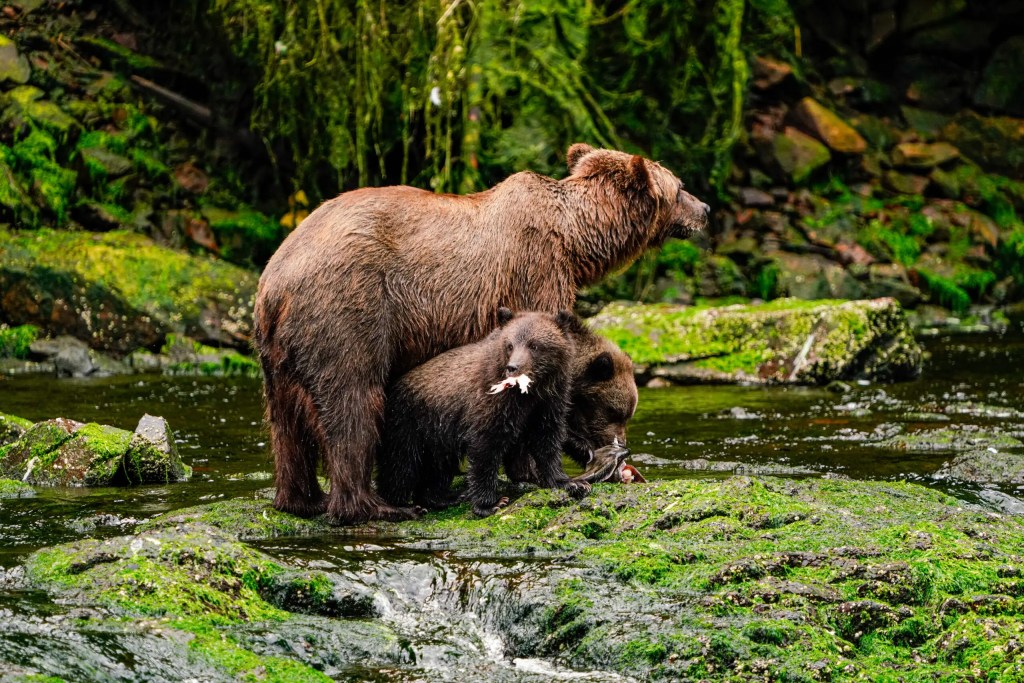
This Little-Known Bear Viewing Spot Is the Best Place to See Brown Bears
Outside Magazine joined Wild Coast Excursions at Pack Creek and Waterfall Creek. Their article highlights bear viewing at Waterfall Creek.
Brook Falls is widely considered to be the bruin-viewing capital of the world, but there’s also a little-known alternative that offers similar scenery and brown bear action, with only a fraction of the visitors. Read more…
Our guides add context to this article on our blog
Watch Outside Magazine’s short video filmed on our trip to Waterfall Creek
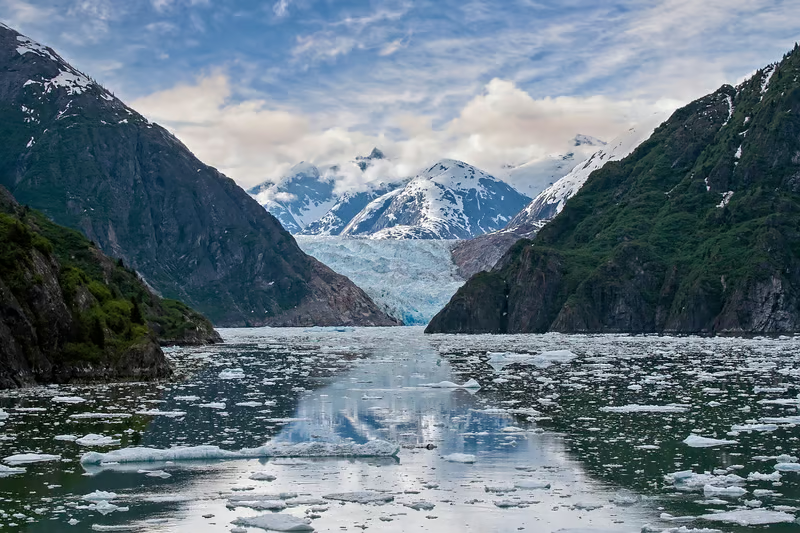
Get to Know Juneau: Things to Do Beyond the Cruise Terminal in Alaska’s Vibrant Capital
Frommers includes Wild Coast Excursions among recommended experiences for visitors exploring Juneau beyond the cruise terminal.
Venture beyond the waterfront for these intriguing tours, cultural offerings, and outdoor adventures. Read more…
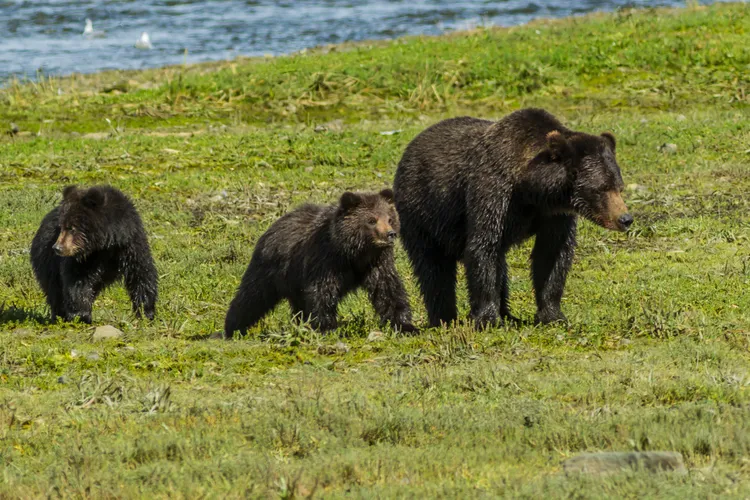
The Essential Guide to the Tongass National Forest
Travel + Leisure interviews Wild Coast Excursions for its guide to visiting the Tongass National Forest.
The Largest Temperate Rain Forest in the World Is in the U.S.—and It Has Stunning Glaciers and Fjords. The Tongass National Forest encompasses 17 million acres and is home to bald eagles, salmon, and bears. Read more…
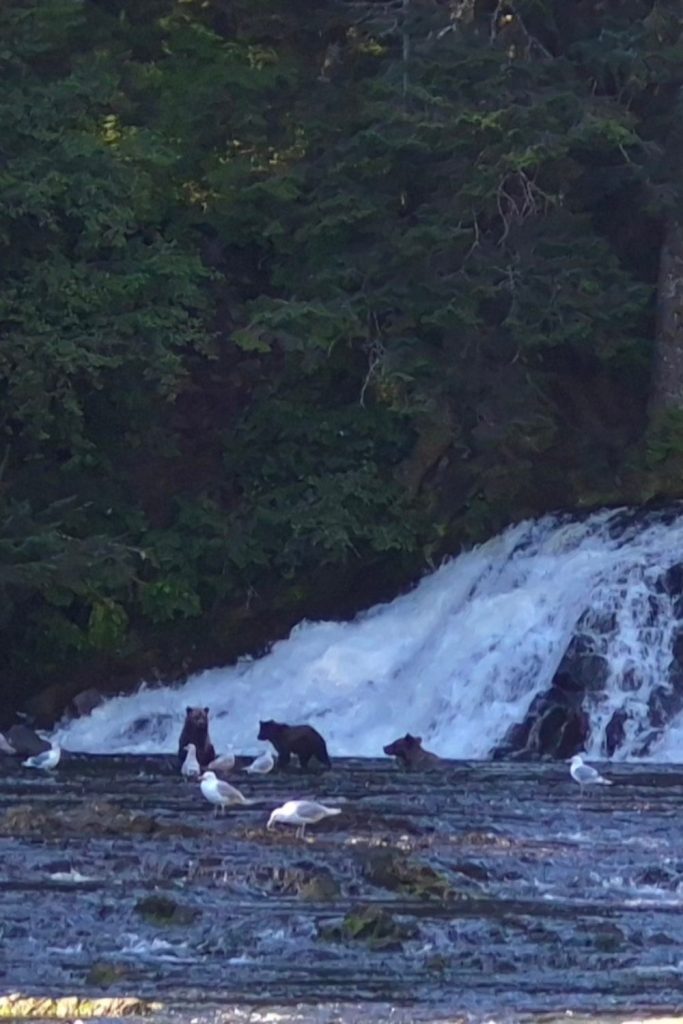
Pack Creek Bear Viewing: Safe, Wild, and Unforgettable
Some days change the way you see the world. For me, one of those days was stepping off a floatplane with our guide, Peter. Read more…

Juneau, Alaska: No Cruise Required
Juneau, Alaska, isn’t just a port of call; it’s a full-on destination, and spending several days here lets you experience it in a way that cruise passengers simply can’t. No cruise required. Read more…

In Juneau, Alaska, a carbon offset project that’s actually working
Grist features Wild Coast Excursions’ carbon-negative heat pump partnership with the Alaska Carbon Reduction Fund.
Visiting Alaska is an emissions-heavy prospect. An innovative program has tourists ease that by helping buy heat pumps for locals. Read more…

Visiting Juneau is a capital idea
Juneau is flanked by white snow-capped mountains, fields of blue ice, verdant green forests and frigid turquoise waters. It’s the perfect destination for travelers who love cozy small-town vibes, as well as those who seek extreme outdoor adventures. Read more…

Give the Thrill of the Alaska Wilderness
Juneau-based Wild Coast Excursions offers experiences of a lifetime, bringing groups up close with Alaskan wildlife. Read more…

Alaska – What’s New in the Last Frontier
Take Wild Coast Excursions out of Juneau with once-daily, intimate hiking and bear viewing tours, all environmentally responsible, natch. Read more…

Wild Coast Excursions Goes Carbon Negative with ACRF!
“Carbon negativity is the cornerstone of our regenerative business goals. Our partnership with the Alaska Carbon Reduction Fund makes that possible.” Read more…
Learn About Our Commitment
As proud Southeast Alaskans, we pledge to serve as stewards of this land and guardians of our communities. We have a commitment to our guests, our environment, our community, and to protect the Tongass.

Our Alaskan Family
We are local Alaskans welcoming you into our home to share authentic and exclusive wilderness experiences. We offer the very best private & small-group wilderness tours to guests from around the world.